
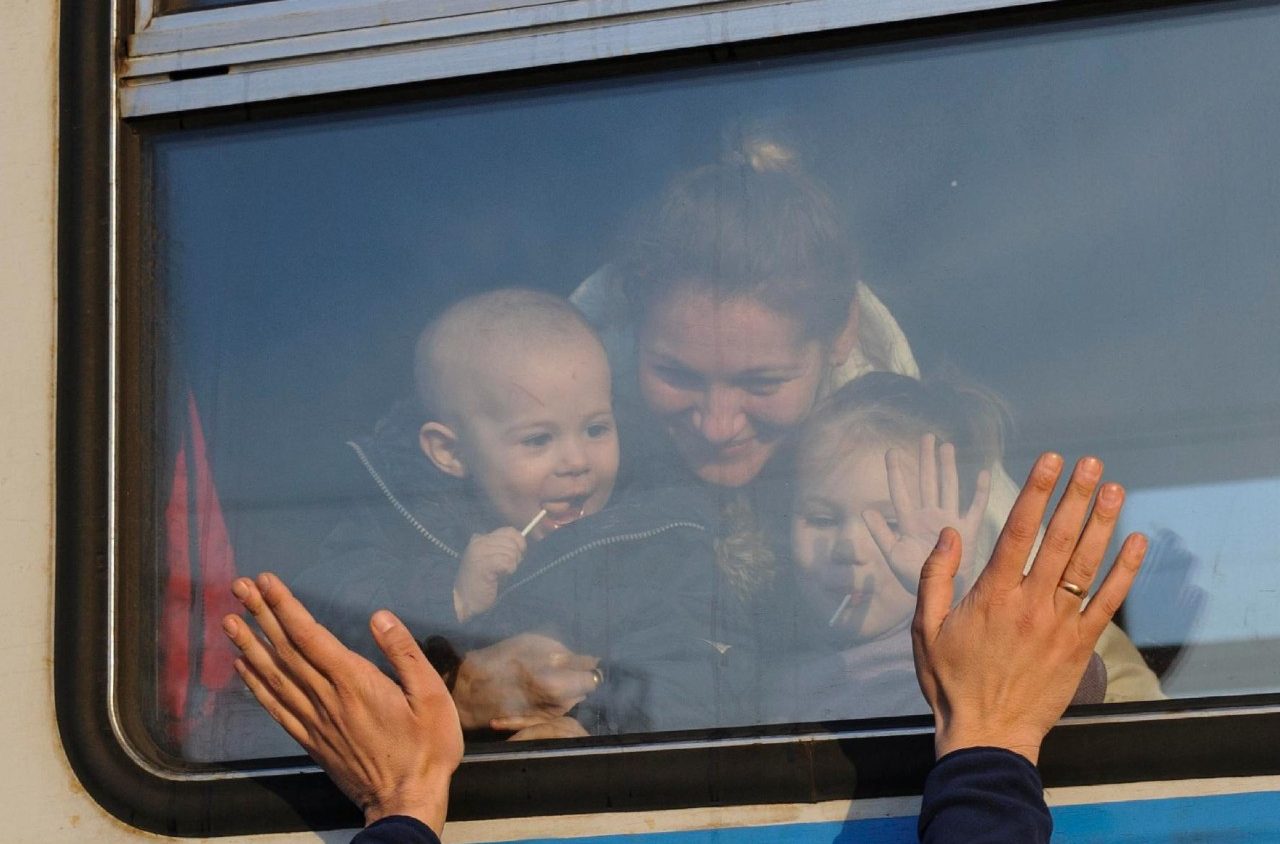

Four years into the conflict, around ten million Ukrainians live away from their homes. Among the internally displaced and refugees abroad, the need for humanitarian assistance is growing, while economic and psychological difficulties are increasing. Despite everything, the desire to return home remains strong.
By Stefano Leszczynski
The war in Ukraine enters its fifth year, leaving behind not only contested territories but, above all, broken lives and fragmented communities. Homes, schools, hospitals, and energy infrastructure continue to be targeted, with a direct impact on the civilian population. According to the United Nations Human Rights Monitoring Mission in Ukraine, 2025 was the deadliest year for civilians: over 2,500 people lost their lives, and more than 12,000 were injured. These numbers confirm that the conflict is still far from a resolution and highlight the intensification of attacks and their consequences on essential infrastructure.
Ten million people who fled
Currently, around ten million Ukrainians live away from their homes. Of these, 3.7 million are internally displaced: they have left conflict zones but remain within the country’s borders. Another 5.9 million have sought protection abroad. “The flow of Ukrainian refugees abroad remains a reality,” explains Elisabeth Haslund, spokesperson for the UNHCR in Ukraine. The main reason remains the lack of security, exacerbated by the energy crisis caused by continuous bombings of infrastructure. According to Eurostat data, in 2025, the European Union—along with the four countries associated with the Schengen Area (Iceland, Liechtenstein, Norway, and Switzerland)—granted 670,000 temporary residence permits to Ukrainian citizens, 12% fewer than in 2024.
The emergency inside Ukraine’s borders
Inside the country, at least eleven million people need humanitarian assistance. Behind this number lie concrete needs: food, shelter, medical care, psychological support, and access to basic services. The majority of internally displaced people are still concentrated in the eastern regions, particularly Kharkiv and Dnipro, in an attempt to stay as close as possible to their homes. The capital, Kyiv, is also under pressure due to the continuous influx of refugees. One of the most urgent issues remains housing, especially for the elderly and vulnerable people. Among the priorities of the United Nations High Commissioner for Refugees (UNHCR) is housing and healthcare support for those with no alternatives.
The challenges of integration
Ukrainian refugees also present specific challenges in the Italian context. “Ukrainians in Italy have never given the impression of wanting to settle permanently,” says Filippo Ungaro, UNHCR spokesperson in Italy. Many children have continued to attend Ukrainian school lessons online, and the level of Italian language proficiency remains relatively low. Another critical issue concerns registration in the municipal registry: many are not registered, thus losing access to social services and rent subsidies. They often rely on informal networks of relatives and friends.
Resilience that should not be normalized
In the second half of 2025, the risks for displaced people and other vulnerable groups increased. Yet, despite bombings and daily hardships, people continue to go to work and take their children to school. This resilience, however, should not become normalized. Behind the apparent ability to adapt lies constant pressure, especially psychologically. Forty-two percent of refugees report difficulties related to mental health, with even higher percentages among the elderly, the chronically ill, and single-parent families.
Challenges returning home
Despite everything, about 1.4 million refugees have returned to Ukraine, staying in the country for at least three months. This is a sign of the widespread desire to return when conditions allow. According to the latest intentions survey conducted by UNHCR, 61% of refugees abroad and 73% of internally displaced people hope to return home one day. However, the number of people who have resigned themselves to never returning to their places of origin is also growing. UNHCR has contributed to repairing over 55,000 homes damaged by the fighting. But financial difficulties, worsened by recent cuts to international cooperation, limit the ability to intervene: fewer resources mean fewer people helped. The front line continues to shift slowly. But the deepest fracture is not just geographical: it runs through the lives of millions of people suspended between waiting for peace and the need to rebuild a future far from home.
