
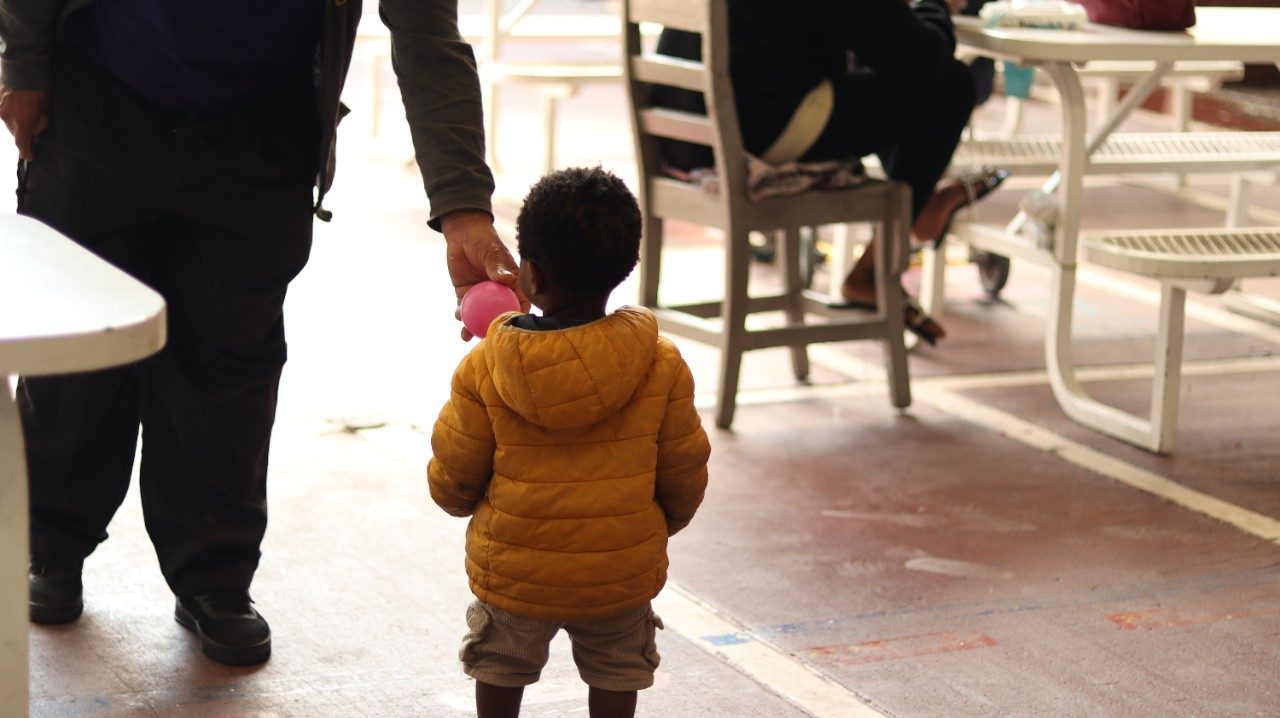
Violence, poverty and lack of opportunities force thousands of Latin Americans to migrate to the United States, triggering a migration crisis that consecrated religious face with professionalism and mercy.
By Rocío García Villegas
“On the migration journey, I have seen tired bodies, but especially wounded hearts; by healing those wounds we remind them that their life has value.”
That’s how Sister María Soledad Morales Ríos described the mission carried out by the Daughters of Mary of the Lord Saint Joseph through the House of Welcome, Formation and Empowerment for Women and Migrant and Refugee Families (CAFEMIN).
For more than 13 years, this place in Mexico City has accompanied more than 20,000 migrants from 70 countries, becoming a refuge of dignity. Inspired by the experience of the migrant Holy Family of Nazareth and in a reinterpretation of its charism, the Congregation offers a concrete response to human suffering.
That’s why in CAFEMIN, nothing is impossible: although its housing capacity is 100 people, in emergency situations, it has housed up to 800.

Adolescent migrants prepare a Boxed Lunch order in the bakery workshop as part of the employer network project. (Photo: Rocío García Villegas) (Foto: Rocío García Villegas)
A mission consolidated on the journey
A defining moment in the consolidation of this mission took place in 2012, when Sister María Magdalena Silva Rentería, current director of CAFEMIN, participated in a Migrant Way of the Cross on the border with Guatemala. That experience gave rise to the first migrant caravan: a 36-day walk of more than 800 people in need of protection.
“It was no longer theory, it was touching suffering, organizing life and defending dignity along the way,” recalled Sister Magda.
Throughout the journey, her presence helped to give visibility to the situation of migrant people, and thus to mitigate the risks involving criminal groups and to improve the authorities’ treatment of migrants.
Thanks to her presence, it was possible to guarantee food, water and places to rest until the migrants reached Mexico City. The experience marked the way in which CAFEMIN understands its processes of formation, containment and life rebuilding today.

In Local Integration, CAFEMIN develops formation, training, and certification activities for the people, which allows them to find ways to support themselves. This group of women is part of the tailoring workshop; they make handcrafted bags.
Suffering Christs of our time
The United States’ current migration policies have restricted access to asylum requests for Latin-Americans, forcing them to cross up to 10 borders and the Darién Gap, a jungle spanning over 575,000 hectares in Colombia and Panama.
There they face swollen rivers, dangerous slopes, and muddy trails that cause injuries, disorientation, and, in many cases, death.
To these risks is added the presence of criminal groups and human trafficking networks. That’s why Sister Mercedes described the migrant as the suffering Christ of today: “Not the Christ of childhood, but the one who is beaten and crucified.”
Leticia, a Venezuelan migrant, said she crossed the Darién with her two children, her father, and 11 other people. “We shared food, exhaustion and fear.”
But the danger didn’t end when they left the area. “I realized that the Darién was not the only jungle; Mexico would also prove to be one, but this one made of concrete,” Leticia recounted.

Josephine Sister Virginia García García; Sister of the Divine Shepherd, Orlanda Carrillo Navarro; Sister of Saint Joseph of Lyon, Lucia Maldonado Castañeda; Sister of the Divine Shepherd, Ernestina Diego Martínez, members of the Network of Religious Women group which collaborates on the CAFEMIN project. (Photo: Rocío García Villegas) (Foto: Rocío García Villegas)
Hunger, abductions, extortion, and threats marked her journey through the country. “There were moments in which I thought we wouldn’t make it out alive. My children witnessed violence that no child should see.”
According to the Psychological Care section of CAFEMIN, 90 percent of women receiving care suffered violence during the journey. Stories like Leticia’s repeat themselves daily in CAFEMIN and in many shelters in Mexico.
According to statistics from the Mexican government’s migration authority, Unidad de Política Migratoria, Registro e Identidad de Personas (UPMRIP), from January to August 2024, 925,085 people in situations of irregular migration were registered in Mexico, among them more than 108,444 children and adolescents.
A place to heal and start again
“Here I was able to stop, think and make decisions for my children’s future. I recovered my joy and peace; I hadn’t laughed in many years,” shared Leticia.
For her and for thousands of others, CAFEMIN is a safe space, whose institutional model is inspired by Pope Francis’ Message for World Day of Migrants and Refugees 2018, in which he proposed a response articulated in four verbs: to welcome, to protect, to promote, and to integrate.
These principles are translated into physical, psychological, spiritual, and legal care, as well as into processes of social integration geared towards rebuilding each person’s life project.
The leadership of the Josephine Sisters has generated an inter-congregational and multidisciplinary network. They have touched suffering, but they have also witnessed lives that get back up.
The migrant journey doesn’t end at CAFEMIN. There, a journey of accompaniment begins, but the dream to offer one’s children a dignified future of peace and opportunities, continues.
Isaías, an 11-year-old Venezuelan migrant, sums it up with simple, hope-filled words: “I never knew if I would make it all the way here… but I did it.”
