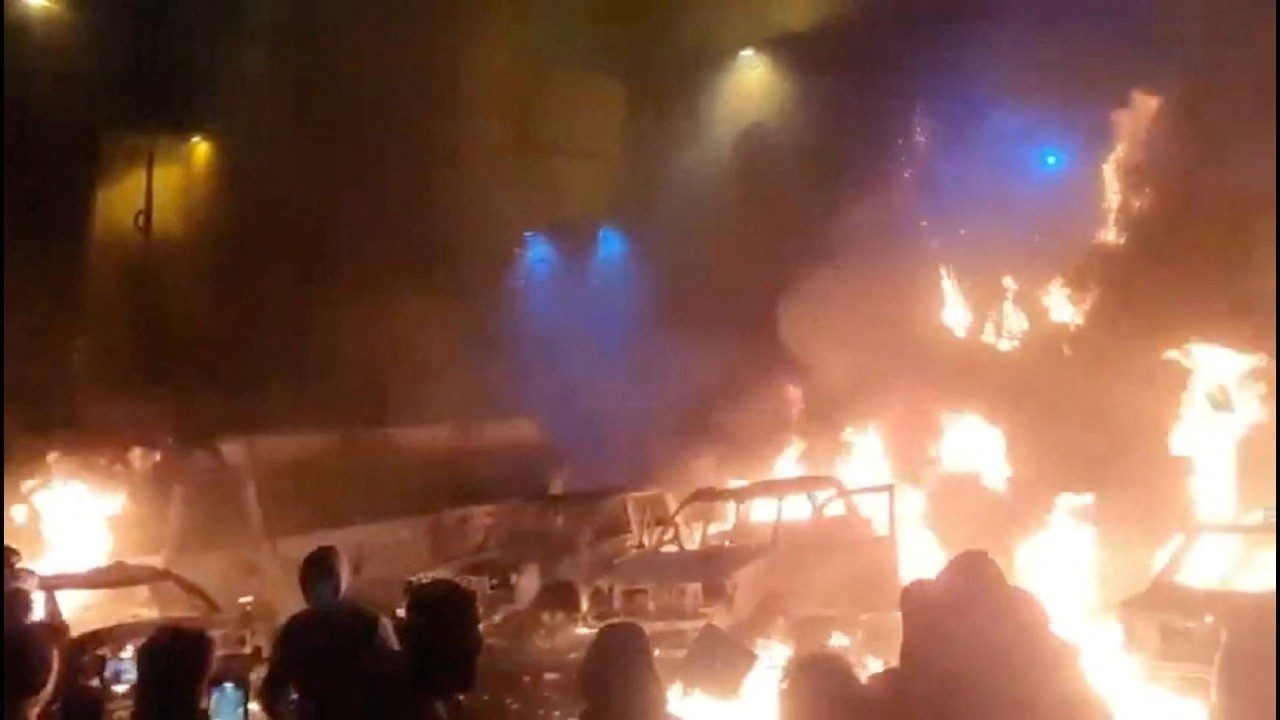

Protests have swept Iran, with demonstrators taking to the streets throughout the country
By Nathan Morley
Protests flared again across Iran on Friday night despite a sweeping security crackdown and a nationwide internet blackout.
This is now the 13th night of protests.
Verified videos published by AFP showed large crowds gathering in Tehran, including in the Sadatabad district, where demonstrators banged pots and chanted slogans against Supreme Leader Ayatollah Ali Khamenei.
International responses
In Washington, U.S. President Donald Trump said Iran was in “big trouble,” warning authorities “you better not start shooting because we’ll start shooting too.”
In a letter to the U.N. Security Council, Iran accused the United States of turning the demonstrations into “violent subversive acts and widespread vandalism.”
Early Saturday, U.S. Secretary of State Marco Rubio posted on X that “the United States supports the brave people of Iran.”
The Norway‑based group Iran Human Rights said at least 51 protesters, including nine minors, have been killed in less than two weeks of unrest.
Demonstrations prompted by economic concerns
The demonstrations began December 28, when shopkeepers in Tehran took to the streets after another sharp fall in the value of the rial against the U.S. dollar.
University students soon joined, and protests spread to several other cities.
The full scale of the unrest remains unclear. With internet access severely restricted, only limited footage has emerged and much of it cannot be independently verified.
This week, French President Emmanuel Macron, British Prime Minister Sir Keir Starmer and German Chancellor Friedrich Merz issued a joint statement urging Iran to protect its population and allow freedom of expression and peaceful assembly “without fear of reprisal.”
The current wave of protests is the most widespread since the 2022 uprising sparked by the death of Mahsa Amini, a Kurdish woman who died in custody after being detained by morality police for allegedly violating hijab rules.
More than 550 people were killed and 20,000 arrested during that crackdown, according to human rights groups.
