
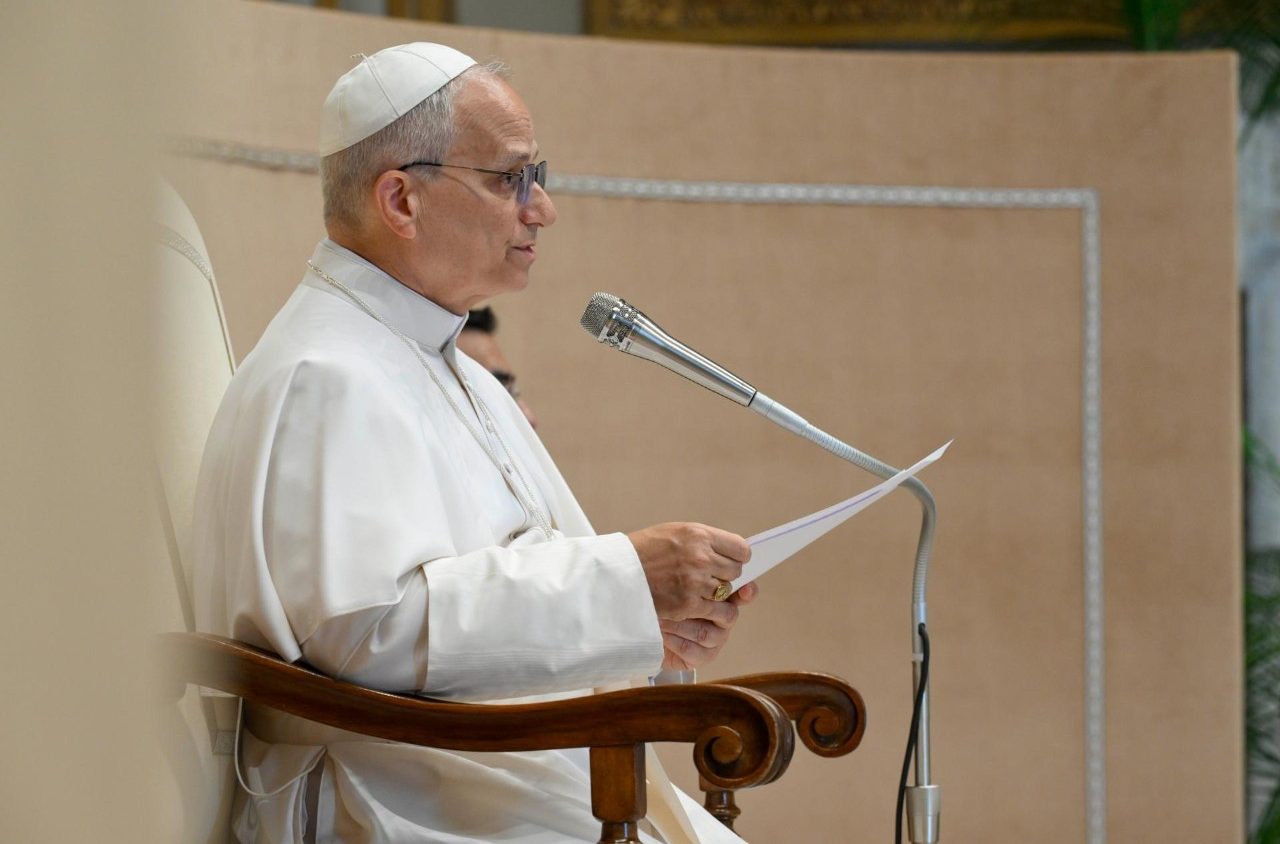

In an address to Italy’s secret services, Pope Leo XIV calls for security rooted in ethics, warning that the pursuit of peace must never come at the expense of human dignity or truth.
By Francesca Merlo
Welcoming members of Italy’s Security Intelligence System on the centenary of its foundation, Pope Leo XIV recalled that it was in 1925 that Italy’s first coordinated intelligence service was established, laying “the foundations for building a more effective and coordinated system, aimed at safeguarding the security of the State.”
One hundred years on, he continued, tools and capabilities have evolved significantly, but so too have the responsibilities and moral risks attached to such work.
Protecting peace, respecting human dignity
Intelligence professionals, he said as he greeted them in the Vatican on Friday, are entrusted with “the serious responsibility of constantly monitoring the dangers that may threaten the life of the Nation, in order above all to contribute to the protection of peace.”
Their work, often hidden from public view, is essential precisely because it seeks to anticipate crises before they erupt.
Yet, discretion, the Pope warned, can also expose intelligence work to misuse or instrumentalization. For this reason, he continued, professionalism must be accompanied by a firm ethical outlook, beginning with “respect for the dignity of the human person.”
“Security activity,” he said, “must never lose sight of this foundational dimension and must never fail to respect the dignity and rights of each individual.”
Even when the common good appears urgent, the temptation to bypass ethical limits must be resisted. Gathering information, the Pope said, inevitably affects individual rights—a reality that demands proportionality, legal clarity, and constant oversight.
The Pope then called for intelligence activities to be firmly regulated by law, subject to judicial scrutiny, and transparent in their financial governance. National security, he stressed, must never come at the expense of fundamental rights, including “private and family life, freedom of conscience and information, and the right to a fair trial.”
The ethics of communication
Pope Leo went on to highlight the importance of the ethics of communication. In a world saturated with data and instant transmission, the Pope warned of the dangers posed by misinformation, manipulation, and the exploitation of the vulnerable.
The “massive and continuous exchange of information,” he said, requires critical vigilance, especially when faced with fake news, blackmail, and the incitement of hatred and violence.
He stressed that confidential information must never be weaponized to “intimidate, manipulate, blackmail, or discredit” public figures, journalists, or civil society actors.
This warning, he added, applies also to the ecclesial sphere. In some countries, the Church itself becomes a victim of intelligence operations that “act for wrongful purposes, oppressing her freedom.”
Such risks, the Pope noted, demand “a high moral stature”—not only from those newly entering intelligence services, but also from those who have long served within them.
Remembering those who gave their lives
Pope Leo XIV then dedicated his thoughts to all those who have lost their lives during delicate missions, often carried out far from public recognition.
“Their dedication may not be recorded in newspaper headlines,” he said, “but it lives on in the people they helped and in the crises they helped to resolve.”
Bringing his address to a close, the Pope expressed gratitude for the role Italian intelligence services play in ensuring the security of the Holy See and the Vatican City State.
He encouraged those present to live their professional vocation with balance and discernment, always keeping the common good in sight and remaining “firmly anchored to those legal and ethical principles that place the dignity of the human person above all else.”
