
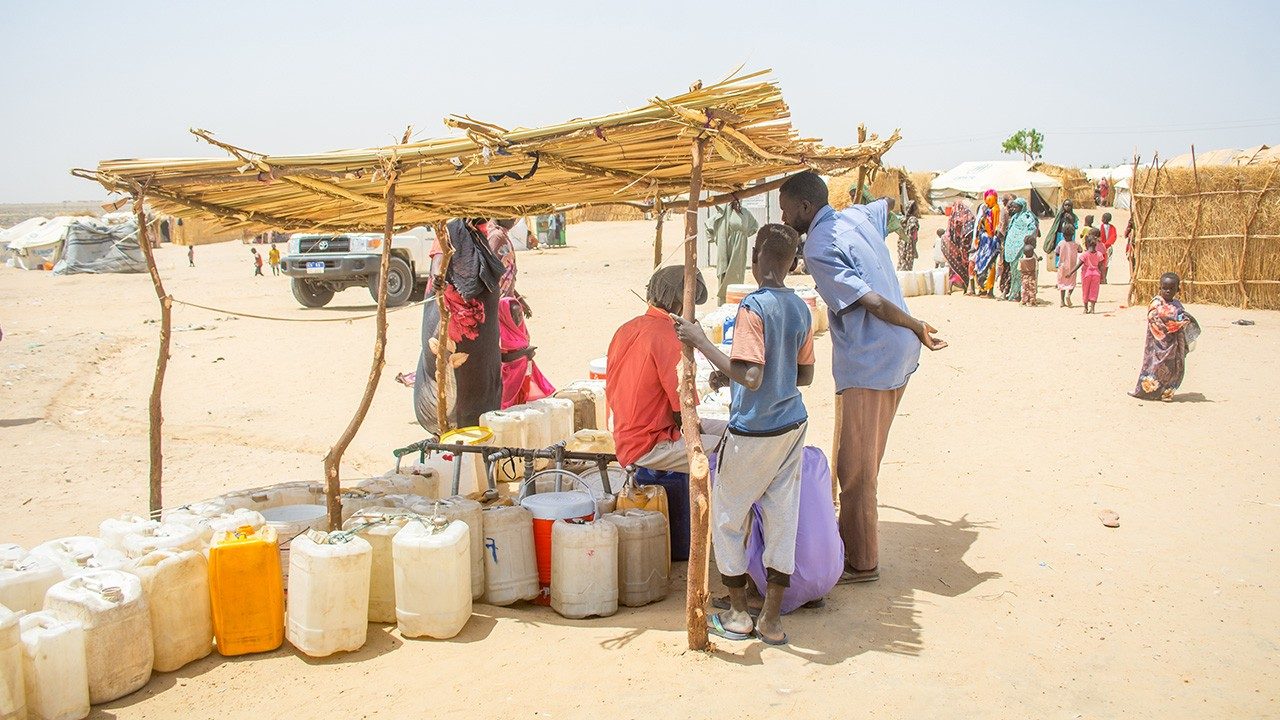
The Director of Advocacy and Communications at the Catholic Agency for Overseas Development (CAFOD) highlights the negative impact of aid cuts on communities around the world.
By Kielce Gussie
On February 25, 2025, the Prime Minister of the United Kingdom, Keir Starmer, announced an increase in defence spending and cuts to aid. That same day, CAFOD, the official aid agency of the Catholic Church in England and Wales, issued a statement denouncing the decision.
At the time, organization’s director and CEO Christine Allen argued that this decision means that “in some of the most vulnerable places on earth, more people will die and many more will lose their livelihoods.”

As part of Caritas lnternationalis – one of the largest aid networks in the world – CAFOD supports families around the world, no matter their religion, to flourish. (CAFOD)
One year later, the Director of Advocacy and Communications at CAFOD, Neil Thorns, stressed in an interview with Vatican News that this statement rings true. The negative and lasting impact these cuts have made on a number of countries around the world is far-reaching.
Justice can bring peace
Thorns argued the rationale behind the government’s choice was that in an unstable world, more money should be dedicated to defence. However, in the words of Pope Paul VI, the way to work for peace in the world is to work for justice.
What that means is creating a more stable, reliable environment for everyone—no matter which country they live in. “You are not going to create that through greater defence spending,” Thorns explained. Rather, peace is created through investing in aid.
“That is the thing that creates stability; it creates peace and harmony across societies”, he noted. But how is the decision to cut aid tied to creating stability and peace in the world?
With the aid cuts in the UK, 2.9 million fewer children in some of the poorest areas of the world will be unable to attend school. Not only that, Thorns highlighted that another 12 million people will be denied access to clean water and sanitation.
Without aid and access to basic necessities, violence can erupt. In some countries, people rely heavily on aid to get by, and if it’s halted, conflict, the climate crisis, or other factors may prevent them from finding other ways to sustain themselves.
All this creates instability. “If you create instability in a country, then you create essentially violence. That violence might mean that people leave that country, and they’re forced to leave and try to come to other countries, again, creating instability”, Thorns explained.
“Ultimately, if you have greater justice in the world and you have less inequality. If you are tackling that inequality and the root causes of that poverty, then you’re going to create the stability for essentially harmonious societies across the world”, the CAFOD Director of Advocacy highlighted.
Aid cuts mean greater gender inequality
Over the last year of aid cuts, women and girls were the hardest hit. According to a report by Equal Measures 2030, between 2019 and 2022, 40% of countries made no progress or actually regressed on gender equality, impacting more than 1 billion women worldwide.
“When previous aid cuts have happened, education has been reduced, the budget for education has been reduced, and we know that will automatically hit women and girls”, Thorns said.
Country of concern
The CAFOD Director of Advocacy stressed that these aid cuts also shine a light on the ongoing conflicts around the world.
Specifically, he expressed his regret that more attention is not given to Sudan, the country facing the current greatest humanitarian crisis in the world. The countru does not receive the visibility needed to create “the diplomatic pressure to stop the conflict” and also “to make sure there is a very effective aid plan that takes on board what local actors in Sudan want”.
Looking to the future
After a year of reflection, Thorns said CAFOD’s view remained the same: decrease in aid funding not only negatively impacted the UK’s reputation, but also failed to “achieve what it was trying to achieve.”
2026, however, could be a turning point for the United Kingdom. This year, the UK will take over the leadership of the G20 in November and it will host the Global Partnerships Conference in May.
The CAFOD Director of Advocacy noted the UK could take important action on the global debt crisis because some countries are struggling with debt repayment. “If the UK took action with 90% of private creditors’ debt being governed by UK law,” he pointed out, “that could bring up huge amounts of money and enable children to go back to school.”

Sudanese students attend a class at a school teaching Sudanese curriculum, in Giza
This would also enable better and more access to health, sanitation, and water. Thorns argued the move could also start to rebuild some of the trust that has been lost due to the aid cuts.
In both the leadership of the G20 and the Global Partnerships Conference, he argued, the UK needs to listen to the voices of the people most impacted, because they know what they need. “They can be artisans of their own destiny.”
Over the last year, the Catholic response in England and Wales to the aid cuts has been huge. More than 500 parishes have engaged in community actions to call for the UK to do more on debt and around the same amount have reached out to their local members of parliament to reverse the cuts.
With enough voices, the decision could be overturned, Thorns said, and the emphasis could be placed once again on investing in aid, which in the long run can lead to peace and stability.
