The Vicar General of the Catholic diocese of Moscow speaks to Vatican News about the ‘countless lives’ lost during the conflict in Ukraine, the importance of empathising with the ‘other’, and the situation of Russia’s tiny Catholic community.
By Jean-Charles Putzolu
Four years have now passed since Russia’s full-scale invasion of Ukraine in February 2022.
To mark the anniversary, Vatican News spoke to Fr Kirill Gorbunov, Vicar General of the Archdiocese of the Mother of God in Moscow.
The following transcript has been lightly edited for style and brevity
Vatican News: Ukraine and Russia have entered their fifth year of full-scale conflict. What is the feeling among the Russian people today?
Fr Kirill Gorbunov: It is, of course, a great honour for me to speak on behalf of our very small Catholic community in Russia. It’s much smaller than most people think. We are less than 1% of the general population, and the number of practising Catholics is even smaller. For many historical reasons, the Catholic Church in Russia is viewed with certain suspicion, as a Church of foreigners, as a Church not really of Russian culture. And this is, of course, a challenge for people, for Catholics in Russia to be, on the one hand, people of Russian culture, Russian language, and at the same time to belong to the worldwide Universal Catholic Church.
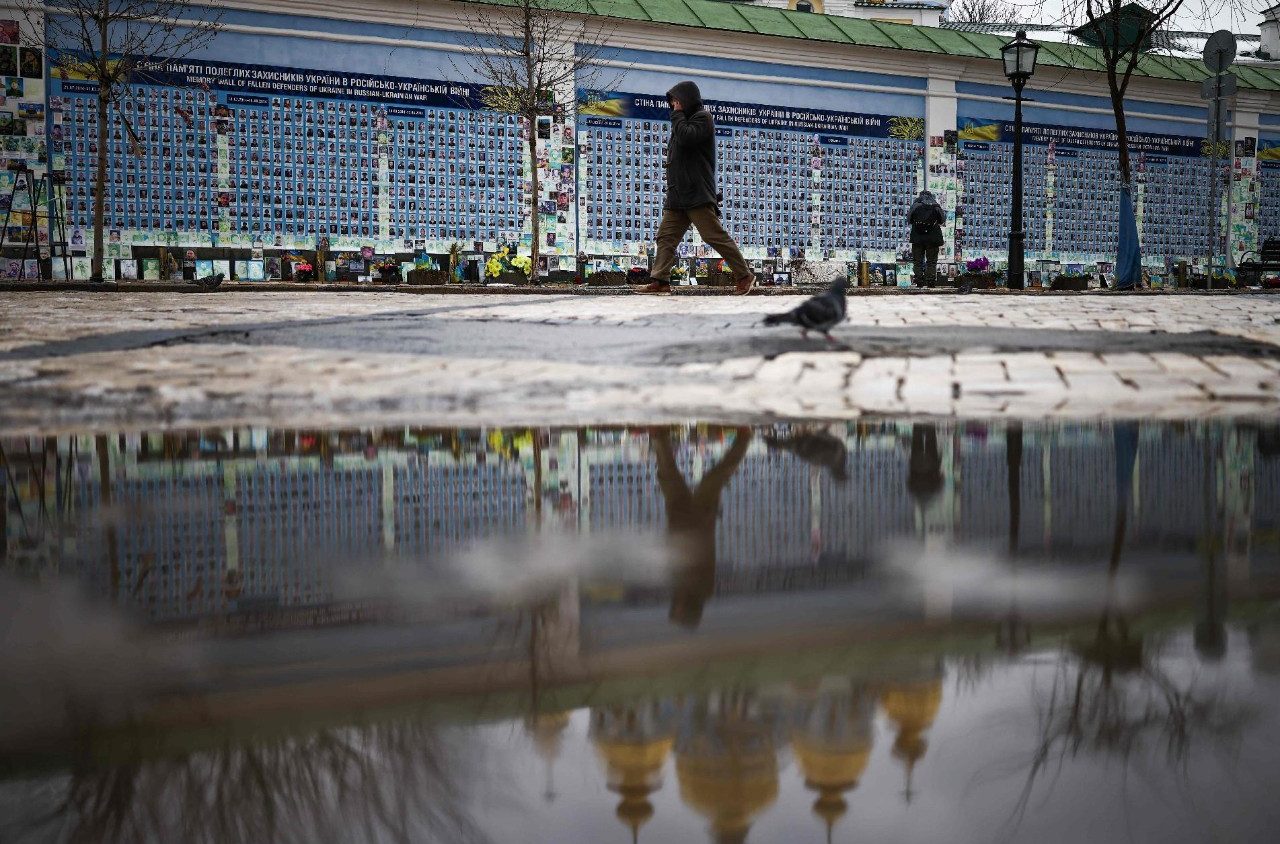
In this time, I would say that people in Russia, Catholics also, have the same attitude towards the conflict that we have. It must end. All the countless lives lost during this conflict speak for themselves. The violence speaks for itself, and the desire is that it must come to a conclusion. This conclusion must be a just and lasting peace, and this is the hope, the expectation of Russian Catholics.
Q: Unfortunately, the death toll has risen significantly over these past four years. Cemeteries have grown. Does the number of deaths impact how Russians perceive this conflict?
A: I cannot speak for all Russians. This would be difficult. I can speak for people whom I encounter, who speak to me as a priest. On the one hand, one position is denial. Many people, unfortunately, prefer to just simply repress this reality, not to pay attention to what is going on and say, “Well, we cannot influence this. We cannot do anything about this. Let’s just pretend that nothing is going on. Let’s just not pay attention”. And then the expectation is: “Let us go back to the situation that was before. Let just things be normal again”. This is impossible.
I was always very much impressed by the courage of Pope Francis, who as early as in 2014 began to speak about the Third World War fought piecemeal. For many people it was very strange to hear these words. And I think these were prophetic words, that he saw something terrible coming. We cannot ignore this reality. As a priest, I have to say to people, “you cannot just pretend that nothing is going”.
For some people, on the other hand, [the conflict] takes up the whole of their mind. They cannot see anything but this horrible reality. So they lose hope. They despair. They question if God -it began during the pandemic- is really good, if he allows these things to happen. But now they question it even more: is it really true what the Church teaches about God being merciful, being good, being gracious, if such things happen? Then of course, we have to look at the history of salvation. We have to look at what Scripture says. And the Scriptures always says that when such things happen, it is because the cup of injustice is overflowing, and something must change. Our lives must change. Not only the lives of the politicians, of political parties, of countries, but the life of every single person must change.
Many of our families are united, but we also have many Russian-Ukrainian families, especially among Catholics, and these families are now divided or even shattered. This is a source of great suffering for people. They have somehow to cope with it.
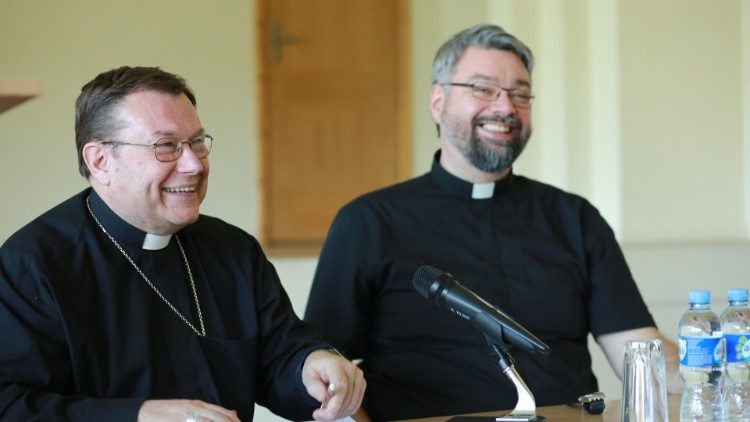
Fr Gorbunov, right, at a conference in Vilnius in 2019
Q: What narrative is being presented about this conflict in Russia? What information do Russians have access to?
A: I would say that the narrative in Russia is very much like the narrative in all other countries directly or indirectly involved in this conflict. The narrative is that the truth is on our side. We are right and the others are wrong and, because I am able to follow the news in different languages, in English and German and Italian, and I can see that, well, the narrative is more or less the same on all sides: that the other, the enemy, is to blame. The other people are bad people, not just simply in the sense that they did something wrong. They are generally bad people of a bad culture, some kind of distorted human nature, not really able to be peaceful, to be reasonable. There is a real deep doubt about the reality of living in peace with the other side. I would say that this is a narrative that is presented on all sides right now.
What is important about the Church’s message is that this is exactly the attitude that we have to overcome. I was deeply moved when, for example, I heard the news about the Ukrainian women’s meeting with Pope Leo and they said: “We cannot blame Russian people for this conflict, because we ourselves do not know how we would behave, what our attitude would be if we were living in the same situation, in the same informational climate and the same informational environment. If we heard the same news, the same ideas. So we cannot blame them for the point of view that they have”.
This is the beginning. This is the point from which we have to start: to understand that people are unfortunately limited by what they see, by what they know, and then we have to go from there, to see how we can move to peace, starting from knowing each other more deeply.
Q: You mentioned the small community of Catholics in Russia. How is this community coping?
A: In general, I would say that the reality is that somehow life continues. What is most important for the Church, of course, are the Sacraments, the common prayer, the liturgy. This continues as usual. But I would say what changes is the renewed understanding of how important unity is for the Church, because we feel it is not only on this level that the unity of the Church is challenged. We all know that there is disunity about liturgy, about certain moral matters, about how the Church must be in the future, about the different services in the Church. We have a lot of points that divide people in the Church.
But of course, such an armed conflict is also a source of disunity. People sometimes are in deep conflict. I live in Moscow, in the biggest parish of the Russian Church, the cathedral parish in Moscow, so it’s maybe not that visible, but when you speak about a normal regular Russian Catholic parish, which are usually very small, of course the divisions sometimes can be disastrous for the community. And [it is important] to accept other people, to be able to pray together despite differences in worldview, in opinion, to understand that God is greater than what divides us. His love is greater. His plan for salvation is greater. And it’s the same for us all. We are not different. He doesn’t look at us with different eyes, with a different attitude. He wants to save all of us. All this is so important: not simply to accept this as an idea, but to really take it to heart, to look at other people with God’s eyes. This is something very, very important.
