
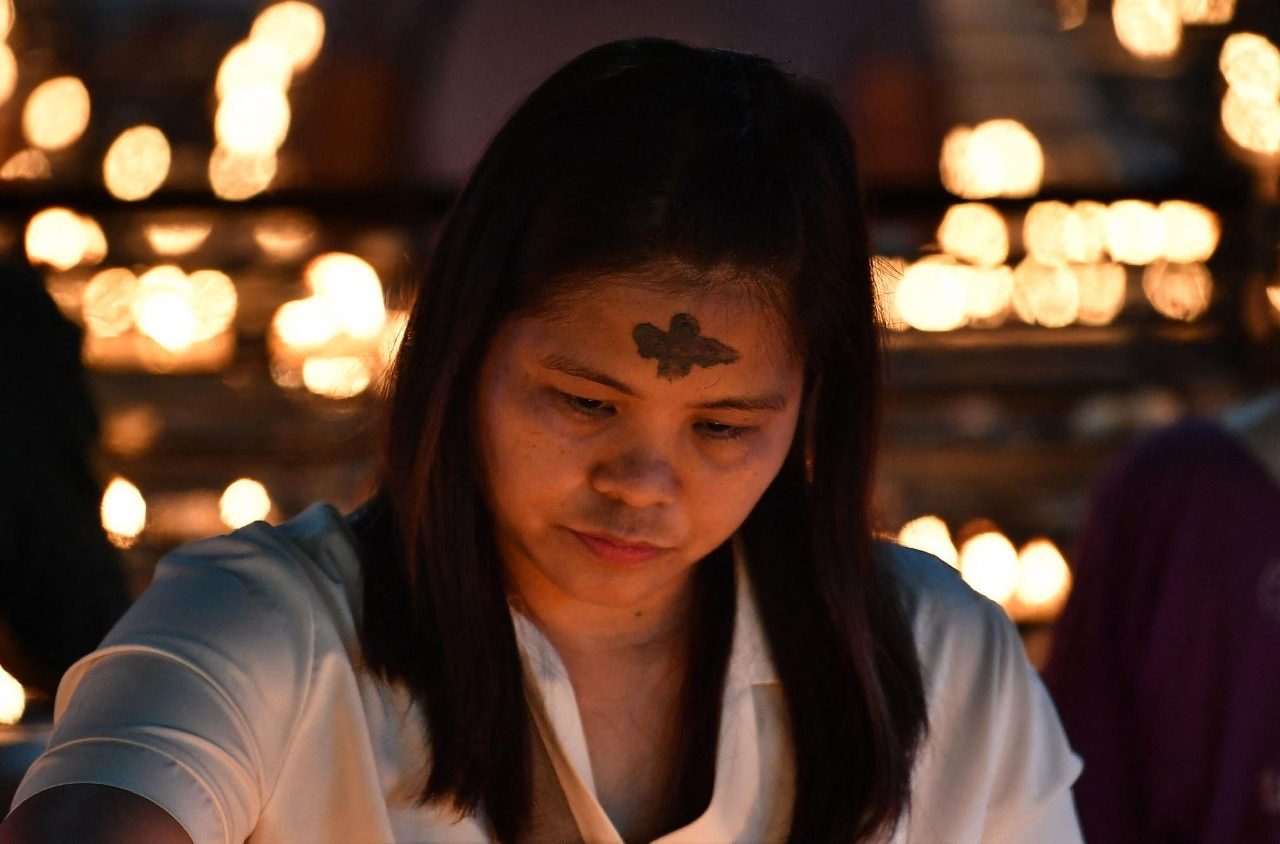
As Ash Wednesday opens the Lenten Season, Jesuit leaders in Asia invite the faithful to join in prayer, fasting, and acts of charitable solidarity with those who suffer due to conflict.
By Chainarong Monthienvichienchai, LiCAS News
Church leaders across Asia are urging the faithful to unite prayer, fasting, and acts of charity in solidarity with people suffering under conflict as Christians worldwide begin the Lenten season this Wednesday.
They point especially to Myanmar, where hopes for peace remain fragile five years after the military coup plunged the country into turmoil.
In a reflection shared with Jesuit communities across the region, Fr. Girish Santiago, Regional Superior of the Jesuits in Myanmar, recalled February 1, 2021, as one of the most decisive and tragic turning points in the country’s modern history.
On that day, the military seized power, abruptly ending a decade-long democratic transition and triggering nationwide unrest and armed conflict.
Now, five years on, the consequences continue to weigh heavily on communities across Myanmar.
According to Fr. Girish, the coup not only shattered political hopes but also unleashed a humanitarian crisis marked by displacement, economic hardship, and deep social divisions.
“For many communities,” he said, “this date symbolizes a choice between fear and conscience, a reawakening of moral resistance, and the cost of standing for truth, justice, and human dignity.”
He described the anniversary as both a day of mourning for lost lives and lost democracy, and a reminder that peace without justice remains fragile.
The reflection was shared as Jesuit leaders gathered for their annual assembly of major superiors organized by the Jesuit Conference of Asia Pacific.

Members of the Jesuit Conference of Asia Pacific gather in Vung Tau, a coastal city near Ho Chi Minh City, during their annual assembly of major superiors. Photo: Fr. Girish Santiago, SJ
The meeting was held at Bai Dau Pastoral House in the coastal city of Vung Tau, near Ho Chi Minh City, bringing together leaders from across Asia-Pacific missions.
While the assembly addressed practical concerns, including formation programs, collaboration among ministries, healthcare support, and youth initiatives, Myanmar’s ongoing suffering remained a key concern in shared prayer and reflection.
Participants reflected on St. Paul’s words in 1 Corinthians: “I planted, Apollos watered, but God gave the growth,” reminding them that mission ultimately depends on God’s grace.
The gathering reaffirmed that collaboration in mission is not merely organizational but spiritual, requiring humility and shared responsibility.
Within the Society of Jesus, leaders emphasized that mission today must move beyond individual ministries toward collective service across cultures and vocations.
In this spirit, the Jesuit Conference reaffirmed its commitment to continue standing in solidarity with the people of Myanmar as they seek peace, reconciliation, and restoration of dignity.
Fr. Girish described Myanmar’s present moment not only as a political crisis but also as a spiritual wound, a cross borne with hope that freedom and reconciliation may one day prevail.
The message resonates strongly as Christians enter Lent, the Church’s 40-day period of preparation for Easter through prayer, fasting, and almsgiving. Lent calls believers not merely to give up comforts but to undergo genuine conversion of heart and renewed commitment to justice and compassion.
Church leaders note that this year’s Lenten journey unfolds amid wars, displacement, economic hardship, and natural disasters affecting many parts of Asia.
Myanmar’s prolonged suffering makes the season’s call especially urgent.
Lent challenges believers to recognize Christ’s presence among the suffering and displaced, and to transform prayer into concrete acts of solidarity.
Aid to refugees, support for displaced families, and advocacy for peace are seen as expressions of faith lived out in difficult times.
The call echoes the teaching of St. John Chrysostom, cited in the Catechism of the Catholic Church, which reminds Christians that withholding assistance from the poor is itself a form of injustice.
As Lent begins, Jesuit leaders and church communities across Asia invite the faithful to remember Myanmar not only in prayer but through concrete gestures of compassion and solidarity.
In the midst of conflict and uncertainty, they insist, hope must continue to be planted and nurtured, trusting that, in time, God will bring growth and healing to wounded nations and weary communities.
For many in Myanmar, that hope remains both a prayer and a promise.
This article was originally published on https://www.licas.news/. All rights reserved. Unauthorized republication by third parties is not permitted.
