
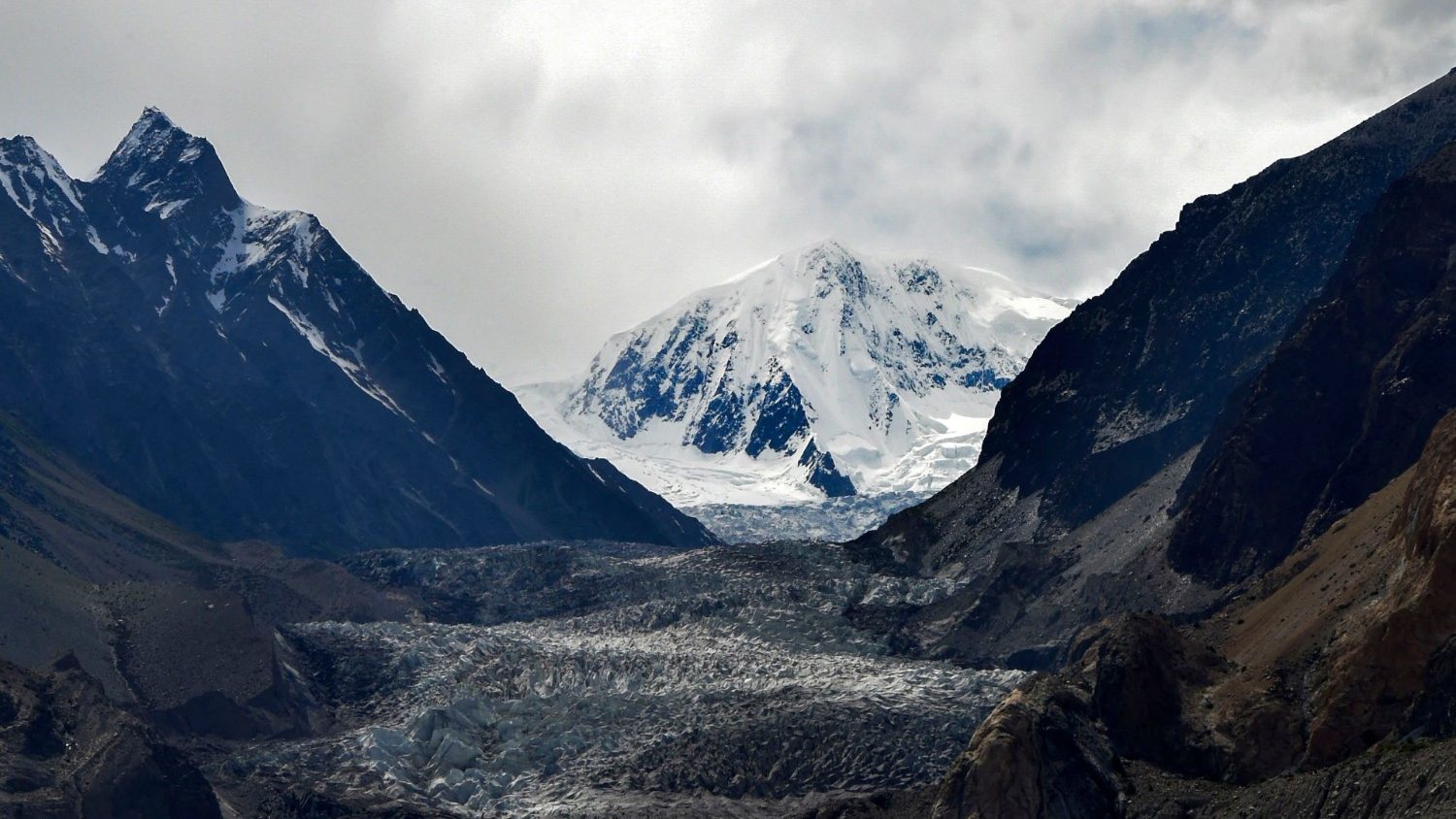
From biblical mountaintops to Ethiopia’s cliff churches, mountain regions hold deep spiritual and ecological significance, now threatened by rapid glacier loss and and a warming planet.
By Francesca Merlo
International Mountain Day invites us to look more closely at regions that are vital to the planet yet often overlooked in global discussions. Mountains regulate climate, sustain biodiversity, and support communities whose cultural and spiritual traditions are deeply tied to the land. Mountains are the world’s water towers, providing freshwater to nearly two billion people.
Biblically, too, mountains carry a strong symbolic significance. Mountains are mentioned in the Word of God not merely as geographic settings but as sacred places where Heaven and Earth meet.
In Scripture, mountains are places of encounter. They mark key moments in salvation history: God giving Moses the Commandments on Sinai; Elijah hearing the Lord in a “still, small voice”; Jesus revealing His glory at the Transfiguration. These scenes remind us that creation is not a backdrop but a space in which God is omnipresent.

The peak of Mount Sinai (AFP or licensors)
Mountains and their water
Yet today, the world’s mountains are under increasing strain. About 70 percent of Earth’s freshwater exists as snow or ice, and glaciers are melting at unprecedented rates. Five of the past six years have marked the fastest glacier retreat on record. Between 2000 and 2023 alone, the world lost 6,542 billion tonnes of glacial ice, and around 600 glaciers have already disappeared. If temperatures continue to rise, many more will vanish.
The consequences for mountain communities are severe. In developing countries, these populations are often among the poorest, and nearly half already face food insecurity. Their ability to grow crops depends on stable water flows from snow and ice. When melt patterns change, the risks of floods, landslides, and water scarcity increase. Today, over 15 million people worldwide are highly vulnerable to flooding from glacier lakes.

Glacioligists inspect the entrance of a natural glacier cavity, Austria
The cultural and spiritual heritage of mountains
Glacier loss is also a loss of cultural and spiritual heritage. Many Indigenous and mountain communities revere glaciers as sacred spaces – the homes of gods, ancestors, or spirits; sources of identity; and vital elements of traditional practices. UNESCO reports that 18,000 glaciers in 50 World Heritage sites are losing 58 billion tonnes of ice each year, and that by 2050, one-third of these glaciers may disappear. When they vanish, so do the cultures, beliefs, and traditions that have surrounded them for centuries.
One example of the connection between faith, culture, and the mountains is the ancient Ethiopian church of Abuna Yemata Guh. Often described as one of the most remote and oldest active churches in the world, it is located high in the sandstone cliffs of Tigray. Reaching it requires climbing the rock face itself. For generations, local communities have made this demanding ascent to worship in a space carved directly into the mountain.

The Gheralta Mountains, in Ethiopia’s Tigray region, where Abuna Yemata Guh is located

Abuna Yemata Guh
Despite mounting threats, there are signs of hope. Around the world, mountain communities are adopting agroecological practices, restoring degraded land, and forming youth-led initiatives to protect glaciers and improve early warning systems for natural hazards. FAO emphasises that combining Indigenous knowledge with science is crucial for developing sustainable land-use policies and protecting water resources.
Global efforts
Global action is needed to preserve the world’s glaciers and support the communities that depend on them. Immediate, ambitious efforts to reduce greenhouse gas emissions, adapt to changing water patterns, and strengthen resilience are essential. The health of mountain regions affects agriculture, biodiversity, hydropower, cultural heritage, and the daily lives of millions. Their protection is not a regional concern but rather a global responsibility.
On this International Mountain Day, we are reminded that mountains do far more than rise above us. They sustain us, and preserving them, and the people who care for them, is an urgent part of our mission to safeguard our common home.

A general view of mountains in Quetta, Pakistan, (ANSA)
