
An international symposium gathers scholars and practitioners to reflect on the transformative impact of digital media on religion and culture across Southeast Asia.
By Fr. Mark Robin Destura, RCJ
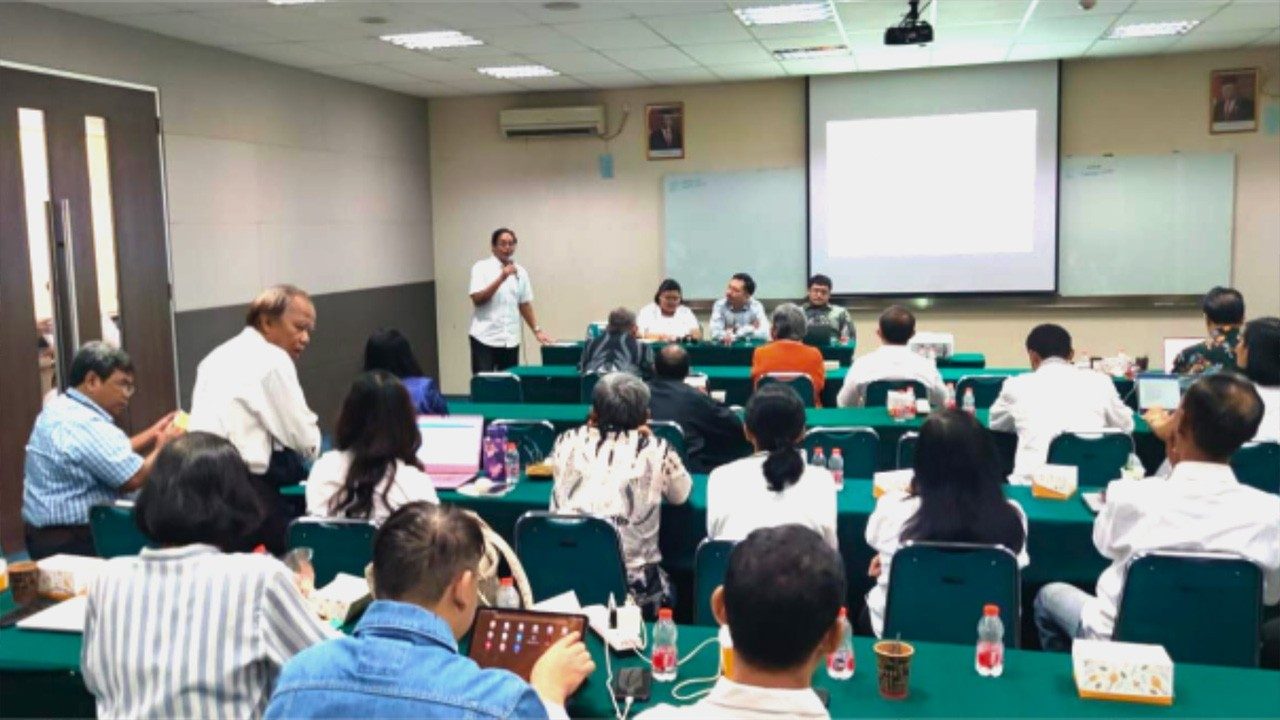
An international symposium on “Media, Religion and Culture” is being held from February 19–21, 2026, at the Institut Filsafat dan Teknologi Kreatif Ledalero (IFTK Ledalero) in Flores, eastern Indonesia.
The three-day event brought together scholars, researchers, and practitioners from Indonesia, the Philippines, Thailand, and Australia. It was organized in collaboration with the Asian Research Center for Religion and Social Communication of St. John’s University, Thailand.
The symposium’s goal is to examine how the rise of digital media is reshaping religious practice and cultural life across Southeast Asia. Participants reflected on both the opportunities and the challenges presented by the digital environment, particularly in societies marked by religious plurality and strong cultural traditions.
Digital religion and responsibility
At the opening of the symposium, the Rector of IFTK Ledalero, Prof. Dr. Otto Gusti Ndegong Madung, SVD, emphasized the ethical and political dimensions of digital religion.
According to Radio Veritas Asia, he said that digital religion must be understood as a field shaped by power, ethics, and responsibility.
“Digital technology is not neutral,” he noted. “It is a political and ethical arena where religious identity, moral norms, and citizenship are constantly negotiated.”
He reflected on the role of algorithmic systems that shape online narratives, tools used both by governments in governance and by the Church in evangelization.
He called for “critical reflection” on digital engagement to safeguard “religious freedom, pluralism, and human rights” in increasingly mediated societies.
Embodying the sacred in the digital age
The first keynote speaker, Benjamina P. Flor from the University of the Philippines, presented a talk entitled “Embodying the Sacred in the Digital Age: A Communication Approach.”
She examined how spiritual practices are being reshaped daily through digital communication.
As reported by LiCAS News, she explained, “online worship should not be viewed merely as a substitute for physical gatherings but as a reconfiguration of sacred experience. Through communicative practices mediated by technology, the sacred continues to be embodied and sustained.”
She frequently used the phrase “embodying the sacred” to describe how sacred presence can be experienced even within digital spaces.
She emphasized that with “sincere intention and moral responsibility, digital worship can foster authentic spiritual connection.”
Religion, media, and culture
Another keynote speaker, Fr. Anthony Le Duc of the Asian Research Center for Religion and Social Communication, focused on the relationship between religion, media, and culture.
He said, “Religion is always expressed through cultural forms, language, symbols, rituals, and daily practices. Today, much of this expression unfolds in digital spaces.”
As cited by LiCAS News, Fr. Le Duc explained that “media does not merely transmit religious messages but actively shapes how religion is represented, interpreted, and judged in the public imagination.”
In the context of Southeast Asia’s religious and cultural plurality, digital narratives can become either instruments of solidarity or sources of division.
Dialogue and regional perspectives
The symposium also featured a panel discussion on social media platforms, religious communication, and peacebuilding.
Panelists included Alexander Flor from the University of the Philippines, Ronald Epafras from Universitas Gadjah Mada, and Fr. Anthony Le Duc.
Their discussions highlighted the importance of responsible communication, especially in multicultural and multi-religious societies where digital content can significantly influence public perception and interreligious relations.
Forming leaders for the digital age
The symposium served as a platform for equipping scholars, researchers, and practitioners—particularly those engaged in digital platforms, ministerial formation, and education.
In a region where digital communication has become deeply integrated into learning processes and pastoral practice, understanding the relationship between media, religion, and culture is increasingly essential.
Through academic dialogue and critical reflection, the participants reaffirmed that the digital environment is not merely a technological space but a cultural and spiritual frontier.
By examining its ethical, communicative, and religious dimensions, the symposium offered an important contribution toward navigating the evolving landscape of media and faith in Southeast Asia.
