
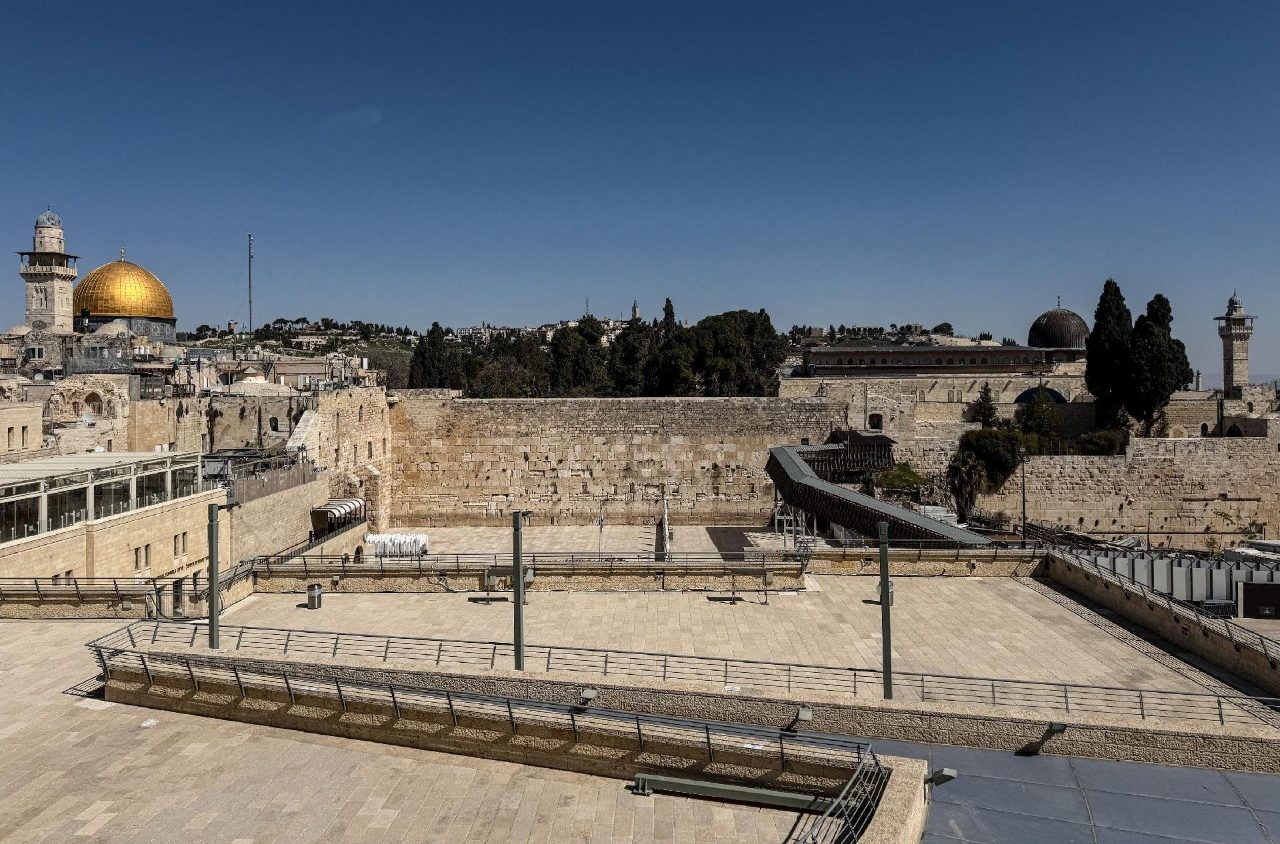
The abbot of the German-speaking Benedictine Abbey of the Dormition in Jerusalem describes the monks’ reaction to the outbreak of the war with Iran.
Vatican News
In an audio message to Vatican News on March 3, Abbot Nikodemus Schnabel described the response of the Benedictine Abbey of the Dormition to the recent outbreak of violence in the Middle East. On February 28, when Israel and the United States launched their bombs, the entire community of Dormition monks was at the Tabgha Priory on the Sea of Galilee—170 kilometers from Jerusalem.
“We had been holding chapter meetings there since Friday — that is, the monk’s parliament. The mood was cautiously hopeful, because since February of this year, for the first time, we had once again been able to welcome pilgrimage groups from Western and Central Europe”, the abbot explained.
He described how there was a “glimmer of hope: perhaps the skies are clearing? For Christians in particular, tourism is very important; 60% of Christians, this small minority in Israel and Palestine, live off tourism.”
Fragile hope abruptly interrupted
The Benedictine monks on Mount Zion in Jerusalem are not the only ones at the Abbey, as there also have 24 local employees—from the parking attendant to the shopkeeper in the abbey store.
“As recently as Friday, the tone of the conversations was: maybe soon we’ll once again be able to finance the upkeep and the wages and salaries of our staff ourselves — through pilgrims”, Abbot Schnabel explained. Yet, this “fragile hope was abruptly cut short early Saturday morning. During the meeting, there was a rocket alarm, and we went into the air-raid shelter.”
About 60 people—monks, staff members, volunteers from the United States and Hong Kong, Filipino sisters, a Palestinian bus driver, and a French pilgrimage group that was visiting the site of the miraculous multiplication of the loaves—sought shelter in the bunker for two hours. In total, about 60 people.
Fraternity in a bunker
In the midst of the bombings, Abbot Schnabel emphasized that the bunker was extremely safe. “We had properly bolted the windows, but you could still hear the launches, and the ground trembled slightly. So you were definitely aware of what was happening around you.”
However, rather than falling into silence, the abbot recounted how the bunker became a place of fraternity. “We sang and prayed in different languages and for the people in Iran…It was a very intense experience. One of the pilgrims celebrated her 19th birthday and people sang happy brithday to her in all the languages present. So that was — even if it may sound strange — a good experience.” He noted that praying as a community of strangers who share a common hope and the roots of their faith was beautiful.
What worries the abbot these days is concern for others. He returned to Jerusalem on Saturday, as did most of his confreres and the streets of the Holy City were deserted. “In Jerusalem, we are currently in our theological study year, alongside students of Islamic theology, as we host Muslim-Christian study weeks. That means in Jerusalem we are truly living as an interreligious community of Christian and Islamic theology students from Germany. It is an interesting experience.”
Abbot Schnabel intends to remain in Jerusalem and persevere in prayer despite the newly intensified circumstances. The “power of the Psalms” is now perceptible in a completely different way, “where human words fail”, he said.
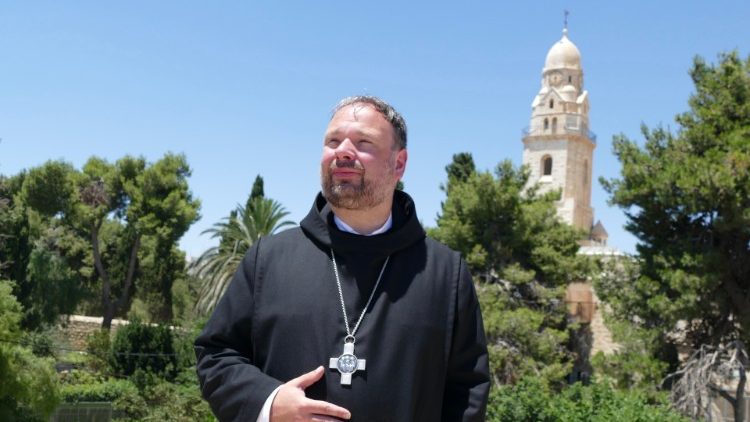
Abbot Nikodemus Schnabel described the response of the Benedictine Abbey of the Dormition in Jerusalem (Elias Ungermann)
They have moved all their prayer times into their crypt as the lower church—traditionally revered as the place of Mary’s falling asleep—is very well protected. The abbot shared that “during Sunday Mass, we noticed ballistic missiles striking near Jerusalem; so you could really sense how small the country is.”
During the prayers of the faithful on Sunday, the Benedictine monks included all those being affected in their prayers—including the “perpetrators” and those in power. Abbot Schnabel explained, “there are some people I would personally like to mark again with cross of ashes, with the words from Genesis Chapter 3: ‘Remember, man, that you are dust and to dust you shall return.’ To me, some people are currently forgetting this reality—that they are mortal beings with an expiration date.”
War strips away the mask
As a pastor, the abbot of the Dormition Abbey feels “very strongly challenged” now. “War strips away your mask. You stand there very exposed, and all the armor you put on in everyday life shatters. Then you stand there with your longings, your fears, your worries. That is when I realized that our primary vocation right now is simply to be there as monks: to listen, to offer comfort, to pray with people.”
As in the last war with Iran in 2025, this time too a migrant worker from the Philippines was killed in an Iranian retaliatory strike. “I sense it again now: thousands of these migrant workers—mostly women from the Philippines, India, Sri Lanka, mostly Catholics, sisters in faith—do not go into shelters because they are caring for elderly people or persons with disabilities and remain with those entrusted to them in those moments. For me, that shows the dirtiness and filth of war, because these innocent people—these modern slaves—pay with their lives.”
‘War is truly dirty’
He stressed that the people being forgotten are “equally created in the image of God, and for whom no great fuss is made—and who are now paying with their lives.”
Large parts of the Middle East, he emphasized, are suffering; people are being traumatized. War destroys lives and in no way makes the world better. “I feel very alienated when people cheer now or follow the news with a kind of frenzy. This is not a football game, not a sports match where two nations compete against each other. War is truly dirty.”
At midday on March 3, the police appeared at the Dormition Abbey and ordered its closure. “We are no longer allowed to remain open—which I find harsh, because there are still pilgrimage groups in the country who cannot leave. We were grateful that our church was open, our cafeteria, our shop — that we monks were there.”
Abbot Schnabel described the church as being an ark, “a protective vessel in this ocean of suffering. We can only pray for the people, pray as a house community. It pains me that we can no longer be that place where people know they can pray, catch their breath, and be safe.”
