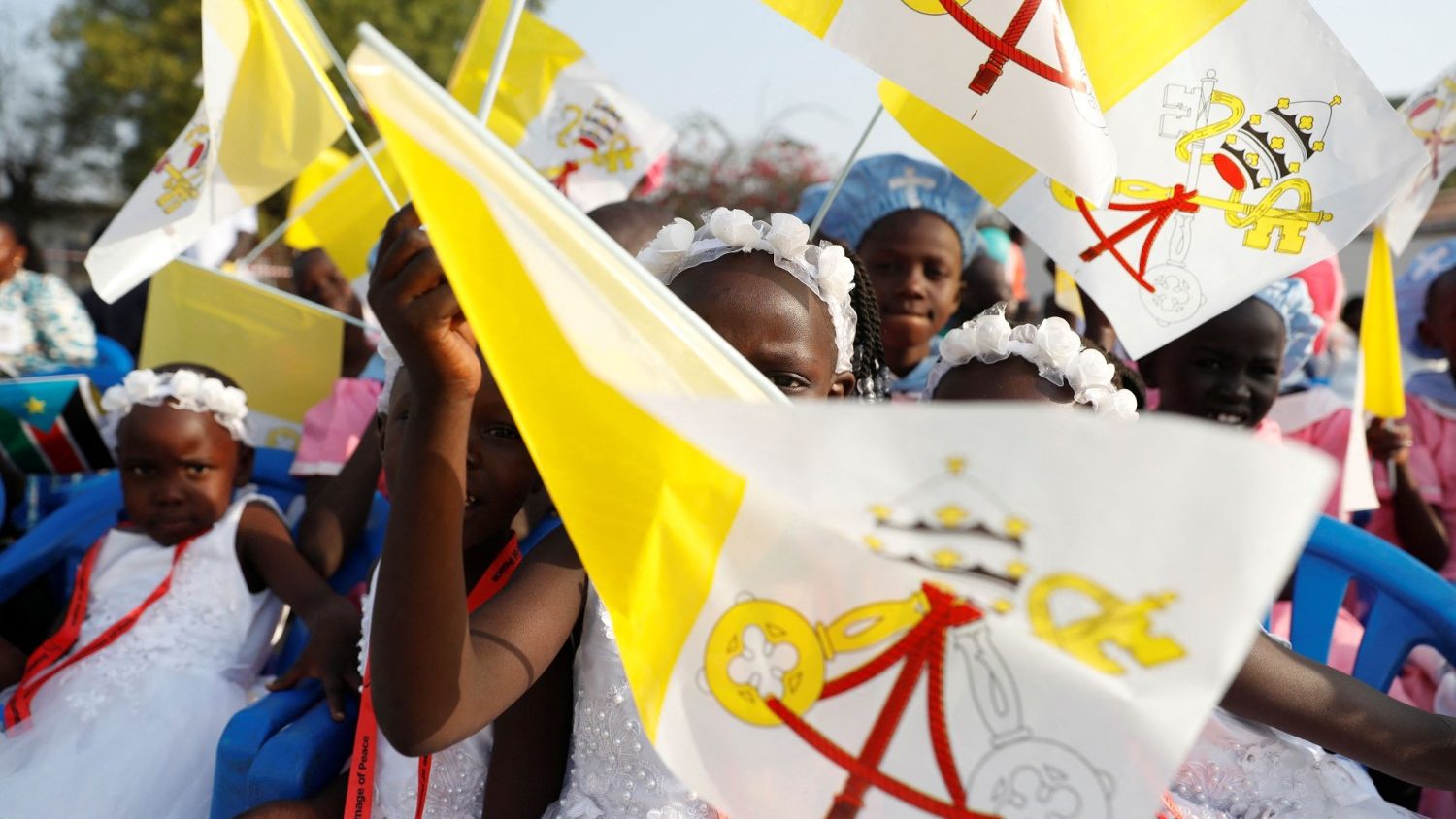
Gratitude and enthusiasm pour in from civil and ecclesial authorities in the various countries that the Pope will visit in the coming months: Monaco, Algeria, Cameroon, Angola, Equatorial Guinea; and Spain.
By Salvatore Cernuzio
Enthusiastic reactions are emerging from the various countries that Pope Leo XIV will visit in the coming months, after the journeys were officially announced by the Holy See Press Office on Wednesday, February 25.
His first visit will be on March 28 to Monaco; he will then embark on a ten-day journey from April 13 to 23 with 11 stops across Algeria, Cameroon, Angola and Equatorial Guinea, before a week-long journey to Spain from June 6 to 12, which includes Madrid, Barcelona, the Canary Islands, Tenerife and Gran Canaria.
In Algeria, the bishops say they are “overjoyed,” while in Cameroun the papal visit is being described as a “sign of hope” amid political and social difficulties, with preparations already underway to guarantee a safe and smooth visit.
From Spain comes a wave of “joy” and “gratitude,” along with assurances of a “warm” welcome. The same is true in the Principality of Monaco, where both the royal family and the local Church emphasize the “honor” of this “historic moment”: the first visit of a reigning Pope to the small city-state.
The Archdiocese of Monaco and the Prince’s Palace
Numerous statements were issued immediately after the announcement of the journeys, starting with those from the Archdiocese of Monaco and the Prince’s Palace.
In the Archdiocese’s note they recalled two commemorations that will be celebrated in 2027: the 780th anniversary of the first parish on the Rock of Monaco, established by Pope Innocent IV’s bull Pro Puritate (December 6, 1247), and the 140th anniversary of Pope Leo XIII’s bull Quemadmodum sollicitus Pastor, which established the Diocese of Monaco, directly subject to the Holy See.
“A young diocese, but a local church rich in history, the Church of Monaco remains a central institution in Monegasque life and is vibrant in many ways, often unknown to the general public,” the statement reads.
It also reiterated the centuries-old bond between the royal family and the Successors of Peter, as well as the fact that the Principality of Monaco is “one of the very few countries where Catholicism is the state religion,” as enshrined in its Constitution.
In addition to this there are numerous shared commitments, such as the respect for human life “from its beginning to its end,” concern for integral ecology and the protection of our “common home,” and a passion for sports.
These bonds, says Archbishop Dominique-Marie David, “have been a compass in the past and continue to guide our decisions… Today, in the face of the challenges affecting the world—and us as much as others—Prince Albert II spares no effort in appealing to everyone’s conscience and keeping alive each person’s sense of responsibility.”
Prince Albert II himself—received by Pope Leo XIV on January 17—together with Princess Charlène, stated that the papal visit “fits within the continuity of the centuries-old ties linking the Grimaldi dynasty to the Successors of Peter, as well as within the framework of the long-standing and trusting diplomatic relations between the Principality of Monaco and the Holy See.”
The statement issued by the Palace emphasized that this is an event of “dual significance, both institutional and pastoral,” and will constitute “a strong sign of hope, in a spirit of dialogue, peace, and shared responsibility.”
The Bishops of Algeria: Pope Leo, “Apostle of Peace”
Hope, dialogue, and peace are the key themes the bishops of Algeria highlight regarding the Pope’s visit to Algiers and Annaba.
The journey follows in the footsteps of St. Augustine, spiritual father of the religious order to which the Pope belongs. He had foreshadowed this journey in December, during the in-flight press conference on the return from his visit to Lebanon, when he said he hoped to “go to Algeria to visit the places of St. Augustine, but also to continue the dialogue and the building of bridges between the Christian world and the Muslim world.”
Now that the date has been set, the Algerian bishops, with Cardinal Jean-Paul Vesco, say they are enthusiastic about this visit.
The Pope “will come to meet the Algerian people and their leaders,” and “to encourage our Church in its mission of fraternal presence among a predominantly Muslim population,” as well as “to remind us of the blessing of having a common elder brother born in this land in the person of St. Augustine, whose example can guide our common path.”
According to the bishops, by visiting the country—where also the martyrdom of the monks of Tibhirine took place— as an “apostle of peace”, the Pope brings Christ’s message and encouragement that “beyond any friction or inner turmoil, whether from the past or present, from turbulent relationships or misunderstandings, we may first and foremost be filled with a sincere desire to live together in peace.”
They therefore ask the faithful to prepare for this visit through prayer “in our hearts and in our communities, in dialogue with our friends.”
Hopes and expectations in Cameroon
“In a context of ongoing political and security challenges,” the Pope’s visit to Cameroon is seen as “a sign of hope” by both the Church and the local population.
The announcement, made public at noon by the Apostolic Nuncio Evelino Bettencourt, “has sparked great enthusiasm and debate” among Cameroonians, explains a statement from the Archdiocese of Bamenda.
The note underlines that for weeks authorities have been working to improve infrastructure, including restoring the airport. This will ensure the success of a visit that “should focus on strengthening the faith of Cameroon’s Catholics, promoting peace, and addressing the country’s humanitarian crisis.”
Spain’s organizational machine is already in motion
Meanwhile, the Archdiocese of Madrid is in celebration after the Holy See’s announcement of the papal visit in June. The entire diocesan community sees the news as “a source of hope and communion for the Church of Madrid,” notes a statement from the Bishops’ Conference.
For months, the Spanish capital has been working on organizing what is “a broad and complex undertaking,” especially considering that it has been about 14 years since Spain last welcomed a Pope—when Benedict XVI visited for World Youth Day in 2011.
The event requires “coordination, planning, and the collaboration of numerous people and ecclesial entities.” Therefore, the Archdiocese of Madrid has long prepared the necessary organizational structures, and Cardinal Archbishop José Cobo Cano has established a Diocesan Commission, which is already managing the various pastoral and logistical aspects.
Madrid, too, calls for a “spiritual preparation” in parishes, communities, movements, and educational centers. Prayer and open hearts, then, “hoping that the presence of the Holy Father will bear fruit in faith, unity, and missionary renewal.”
This was also stated by the president of the Spanish Bishops’ Conference, Archbishop Luis Argüello, in a video message in which he emphasized that the visit also constitutes “a challenge” in terms of “openness of heart” as well as “organization.”
Pope Leo XIV, he added, will visit Spain “to confirm our brothers and sisters in the faith of the Church, which then transforms into hope and charity in the concrete life of our Churches.”
Along the same lines, the Archdiocese of Barcelona and the Sagrada Familia Construction Committee expressed “gratitude” to Pope Leo for accepting the invitation to visit the Basilica, confirming his presence at the ceremony commemorating the centenary of the death of the architect Antoni Gaudí.
In this case as well, Benedict XVI was the last Pope to visit the Catalan city in 2010, when he presided over the consecration ceremony of the Sagrada Familia.
