
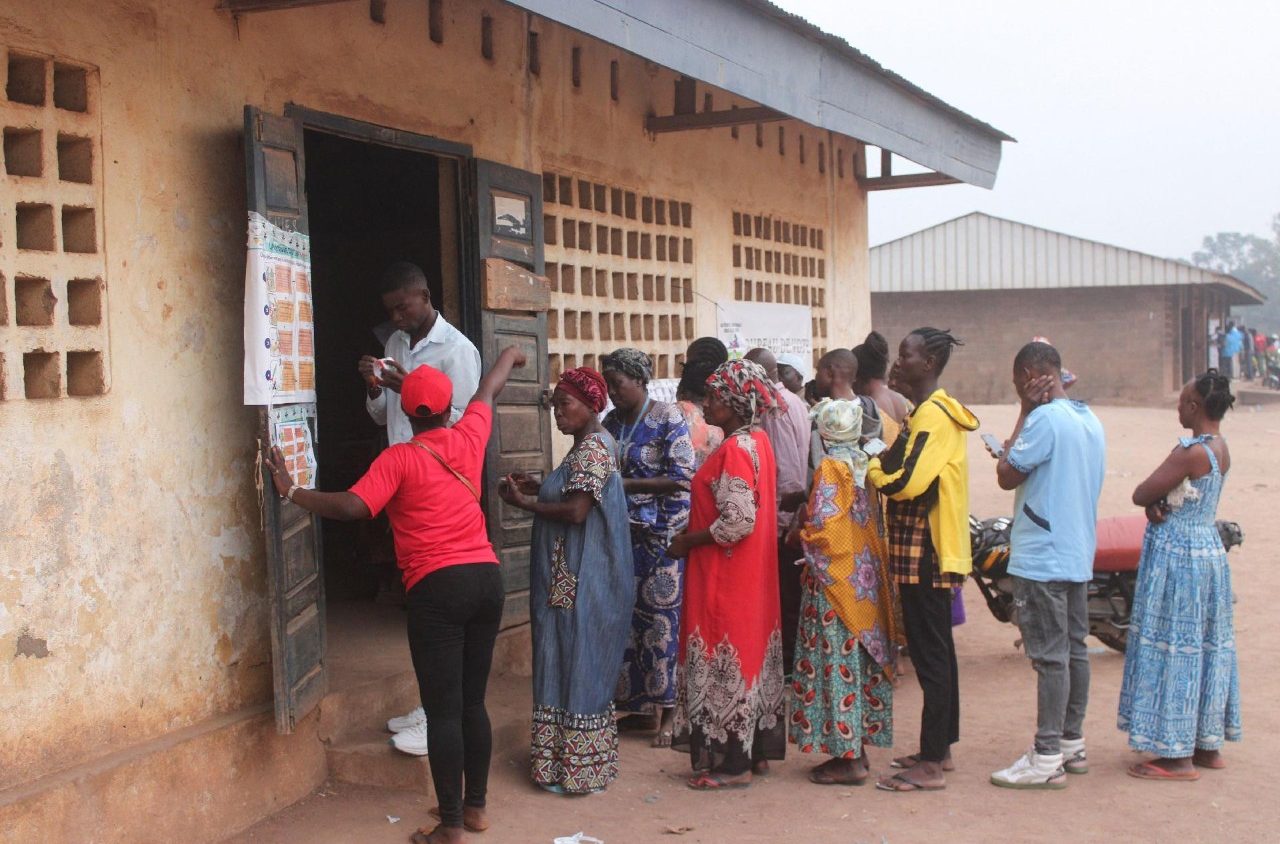

Citizens in the Central African Republic are choosing representatives at the presidential, legislative, regional, and municipal levels in an election marked by controversy.
By Nathan Morley
Voters in the Central African Republic cast ballots Sunday in presidential and legislative elections clouded by controversy, with President Faustin-Archange Touadera poised to extend his rule beyond two terms for the first time in the nation’s history.
The vote follows a contentious referendum that scrapped presidential term limits, prompting opposition leaders and civil society groups to denounce the process as undemocratic. Some have boycotted the election entirely, calling it a “sham.”
Approximately 2.3 million people are registered to vote at more than 6,700 polling stations across the country, according to the National Elections Authority.
Citizens are selecting representatives at the presidential, legislative, regional and municipal levels.
African Union sends election observers
The African Union has deployed observers to monitor the vote, which comes amid heightened tensions and allegations of political obstruction.
Opposition candidates Anicet-Georges Dologuele and former Prime Minister Henri-Marie Dondra accused the government of blocking their campaigns in provincial areas — claims Touadera’s camp has denied.
Touadera, who first took office in 2016, has faced criticism for consolidating power in a country long plagued by instability.
Despite vast reserves of crude oil, gold and uranium, CAR remains one of Africa’s poorest nations, hobbled by decades of conflict and weak governance since gaining independence from France in 1960.
Ahead of the polls, U.N. Secretary-General António Guterres urged Central Africans to vote peacefully and called on authorities to ensure the process is “peaceful, orderly, inclusive and credible.”
He also appealed to political actors to avoid actions that could incite violence or erode public trust.
