
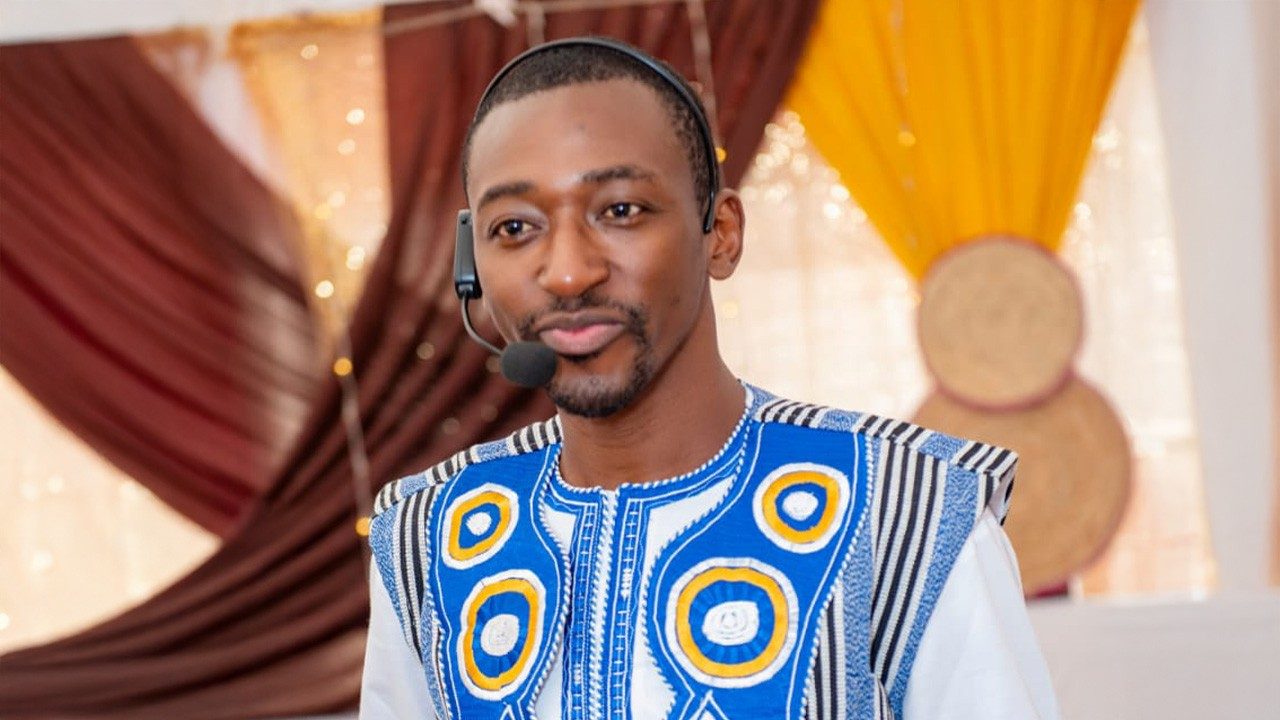
Over the weekend, as the International Day of Prayer and Reflection Against Human Trafficking was observed, sociologist Roger Dayamba, a member of the Pan-African Network of Catholic Theology and Pastoral Care (PACTPAN), shared with Vatican News what he described as perilous links between security crises, family pressures, the quest for survival, and trafficking networks in Burkina Faso.
Jean-Paul Kamba, SJ – Vatican City
Established by Pope Francis in 2015, the World Day of Reflection and Prayer Against Human Trafficking is observed each year on 8 February, the feast of Saint Josephine Bakhita. Known as the patron saint of trafficking victims and survivors, St. Josephine Bakhita was a Sudanese nun who experienced the trauma of being a victim of human trafficking as a child.
This year, the day was commemorated under theme: “Peace Begins with Dignity: A Global Call to End Human Trafficking.”
The theme underlines the fact that the foundation of genuine peace is human dignity. Since the beginning of Pope Leo XIV’s pontificate, bringing about peace to a troubled world has taken centre stage in his papacy. This inevitably emphasises the importance of respecting human dignity. To enable people to thrive on their own land, the Holy Father reminds the world of its responsibility to ensure decent living conditions for all.
Conversely, the scale of current migration flows reveals a rupture: when basic conditions for well-being are no longer attainable, exile becomes the only horizon for hope of a better future.
Sociologist, Roger Dayamba, is a member of the Pan-African Network of Catholic Theology and Pastoral Care (PACTPAN)
In Burkina Faso, the issue of migration is not just about geographic mobility. It is a matter of survival and, in many aspects, also a mirror of social aspirations. For Roger Dayamba, a sociologist trained at the Joseph Ki-Zerbo University in Ouagadougou, Burkina Faso, the distinction between voluntary migration and human trafficking is increasingly blurred, exacerbated by insecurity.
Migration as a ‘rite of passage’
In Burkina Faso’s collective imagination, leaving home is often synonymous with social ascent. This perception drives many young people toward the unknown, sometimes disregarding danger and risks. Leaving one’s place of origin, explains Roger Dayamba, “can be seen as a clear sign of success. It’s a social duty, and the family expects a lot from you, as a young man.”
This pressure, although often accompanied by financial and moral support or investment from the family, creates fertile ground for predators such as human traffickers. The family, observes the Burkinabe sociologist, plays an ambivalent role: it is both the “safety net” and the engine that, unwittingly, can push its young toward exile at any cost.

Perilous journeys (AFP or licensors)
Insecurity and migration
“Traditional paths for international migration have been disrupted and are largely closed. As a result, people have developed new, longer and alternative routes in a bid to escape surveillance. Unfortunately, these lead them to fall prey to traffickers lying in wait. It’s an opportunity for the ruthless.”
The security crisis that Burkina Faso is experiencing has indeed profoundly changed displacement dynamics. It has also meant that traditional migratory routes cannot be used anymore. By blocking these traditional routes, the populations are forced to take detours, far from institutional protections, said Dayamba.
However, Dayamba praises the “extraordinary work of Burkina Faso’s defence and security forces, who are increasing intercepting trafficking networks.” He nevertheless emphasised that the fight must also be waged on the information front.
The challenges of reintegration
For PACTPAN, the fight does not stop at prevention. Welcoming victims is a central pillar of its action. The sociologist highlighted some socio-cultural obstacles, such as shame, stigmatisation, and feelings of failure among returnees. These prevent victims from returning home voluntarily. “Victims of exploitation need our love, our support, and genuine solidarity,” he said.
PACTPAN, Dayamba notes, relies on a “pastoral of proximity,” which begins at the grassroots level—targeting children, using local languages, and creating awareness clubs in schools to embed the message: “A child’s place is at school, not elsewhere.”
