
Reporters Without Borders release a report listing the number of journalists killed this year: “2025, a deadly year for journalists: this is where hate and impunity lead”.
By Francesca Merlo
A year marked by conflict, organised crime, and rising hostility towards the press has left behind a sobering toll: 67 journalists killed, 503 imprisoned, 135 missing, and 20 held hostage. These figures, presented in the latest annual report by Reporters Without Borders (RSF), point not simply to casualties of war, but to a deeper tragedy – the deliberate silencing of voices committed to telling the truth.
“Journalists do not die; they are killed”. This distinction reveals a reality in which violence against the press is not incidental, but intentional – a strategy imposed by those who fear what free information can unveil.
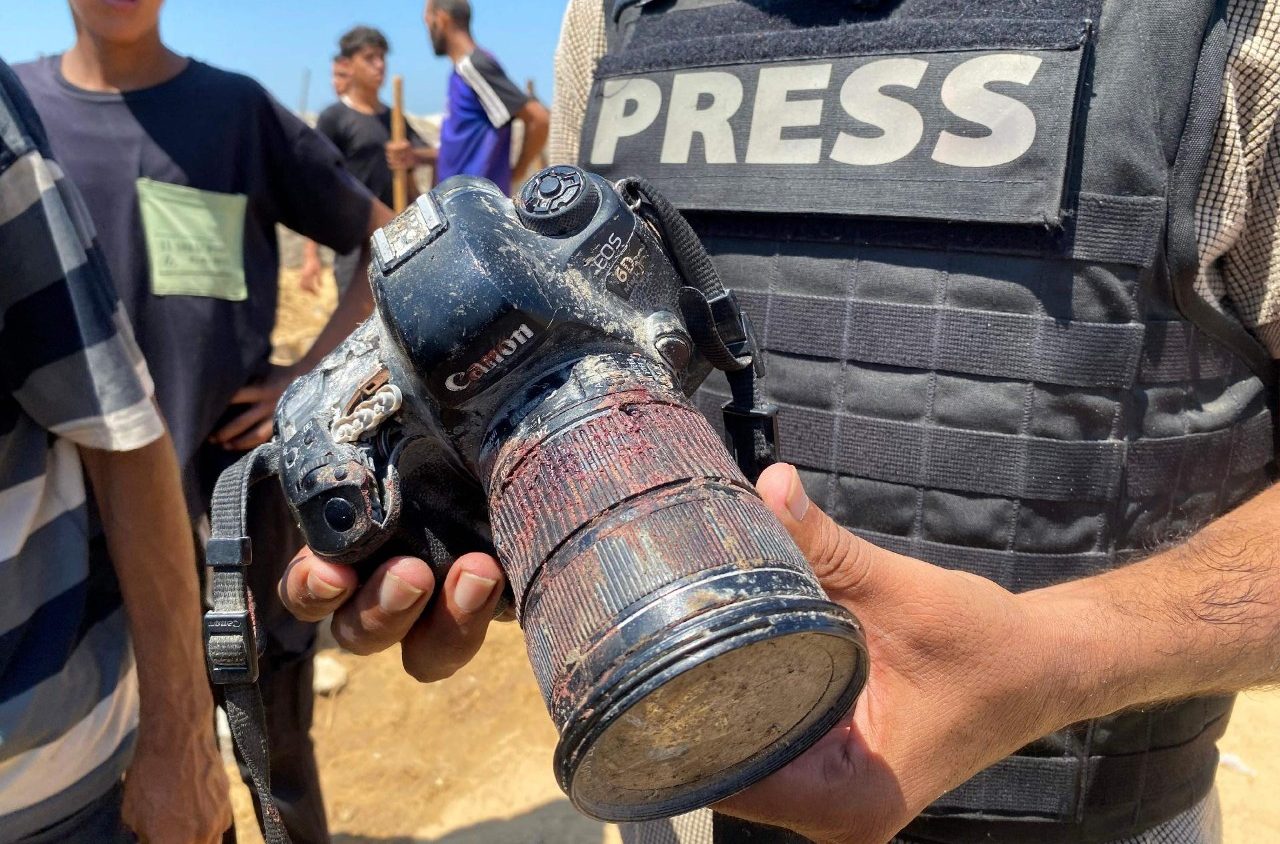
Nearly half of all journalists killed this year – 43% – lost their lives in Gaza, a place where, according to RSF, Israeli forces have repeatedly targeted media workers. What emerges is an image of a region where documenting reality has become as dangerous as conflicts themselves.
Yet Gaza is not alone. From Ukraine to Sudan, from Yemen to Syria, reporters continue to disappear, be detained, or become direct targets of military and paramilitary groups. These are not the accidental casualties of frontline reporting, RSF stresses, but the intended victims of a calculated effort to eliminate witnesses.
Across the ocean, another pattern persists. In Latin America – and particularly in Mexico, where at least nine journalists were killed – violence against the press has its own grim logic. Drug cartels, corrupt local powers, and entrenched criminal networks create a climate in which investigating the truth often results in a death sentence.
RSF describes this ongoing crisis as the “Mexicanisation” of violence: the spread of a model where intimidation, disappearances, and murders are used systematically to silence independent journalism. In many cases, the perpetrators remain untouched, and impunity becomes a shield for further bloodshed.
What unites these diverse regions – from the Middle East to Latin America – is the steady erosion of a fundamental human right: the right to information. When journalists are targeted, societies lose their eyes and ears. In a world increasingly shaped by disinformation and polarisation, the absence of free reporting leaves communities vulnerable to manipulation and fear.
RSF’s report stands as a reminder that the defence of truth is inseparable from the defence of life itself.
About the Author