
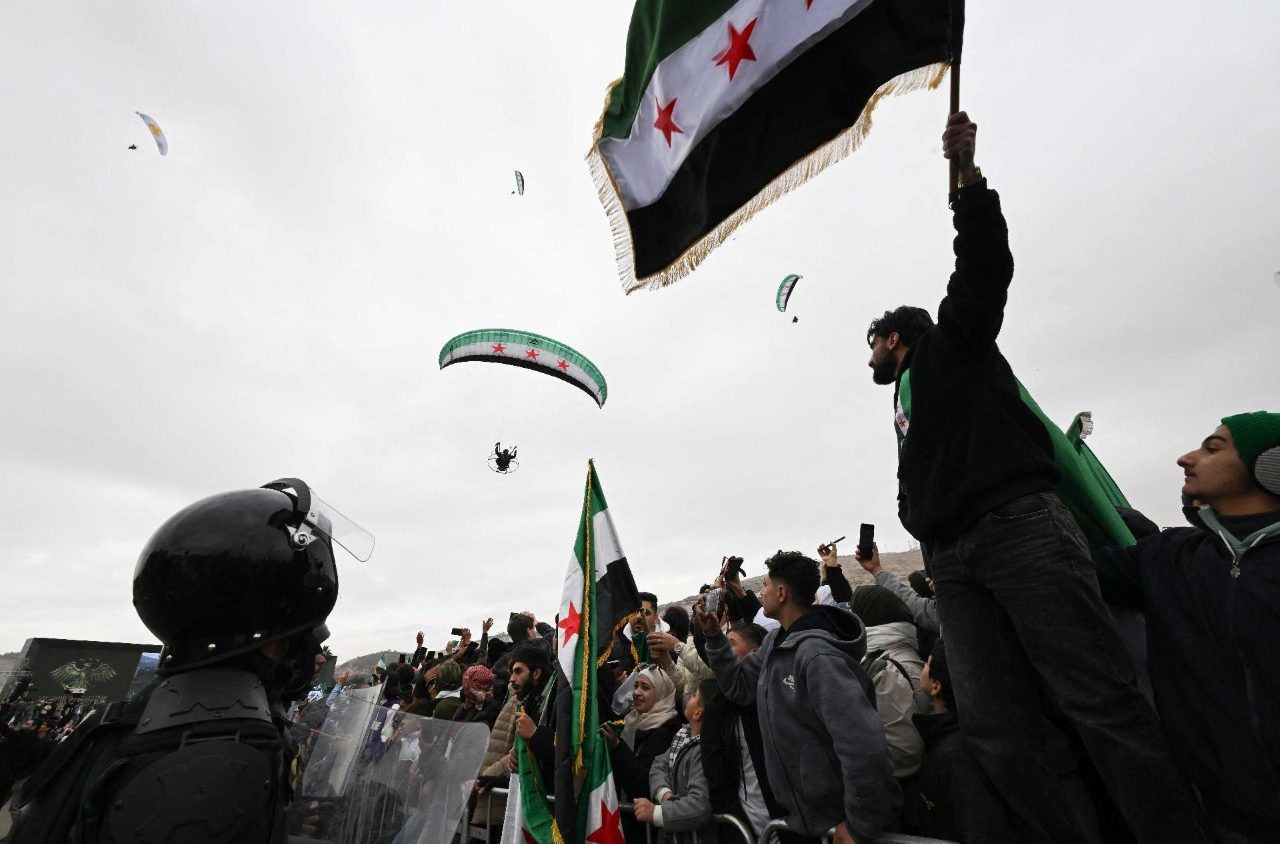

Syria is marking one year since the fall of longtime ruler Bashar al-Assad after nearly 14 years of war.
By Nathan Morley
Syria is marking the first anniversary of the fall of longtime ruler Bashar al-Assad, who was ousted on December 8 last year after nearly 14 years of conflict.
The al-Assad dynasty, which held power for 54 years, ended when a rebel offensive forced Assad from office after his 24-year rule marked by accusations of widespread torture and repression.
Up to 300,000 people remain missing, with scores of mass graves believed to exist across the country.
The war triggered one of the world’s largest migration crises, with 6.8 million Syrians — about a third of the population — fleeing at its peak in 2021.
More than half settled in neighbouring Türkiye, while hundreds of thousands found refuge in Lebanon and Jordan.
The UN refugee agency says more than 3 million Syrians have returned since late 2024, though many face dire conditions with no functioning infrastructure, schools, or health services.
European Council President Antonio Costa on Monday reaffirmed the EU’s support for Syria, pledging commitment to a peaceful, Syrian-led process focused on justice, reconciliation, and recovery.
UN Secretary-General Antonio Guterres also urged the international community to back the transition, stressing that success depends on sustained humanitarian funding, reconstruction, and economic development.
“What lies ahead is far more than a political transition; it is the chance to rebuild shattered communities and heal deep divisions,” the UN chief said. “It is an opportunity to forge a nation where every Syrian – regardless of ethnicity, religion, gender or political affiliation – can live securely, equally, and with dignity.”
About the Author