
Pope Leo XIV calls upon billions of people around the world to engage in a shared commitment against the “madness of war,” those who, in this dramatic hour of history, do not surrender to the idolatry of money and power.
By Andrea Tornielii
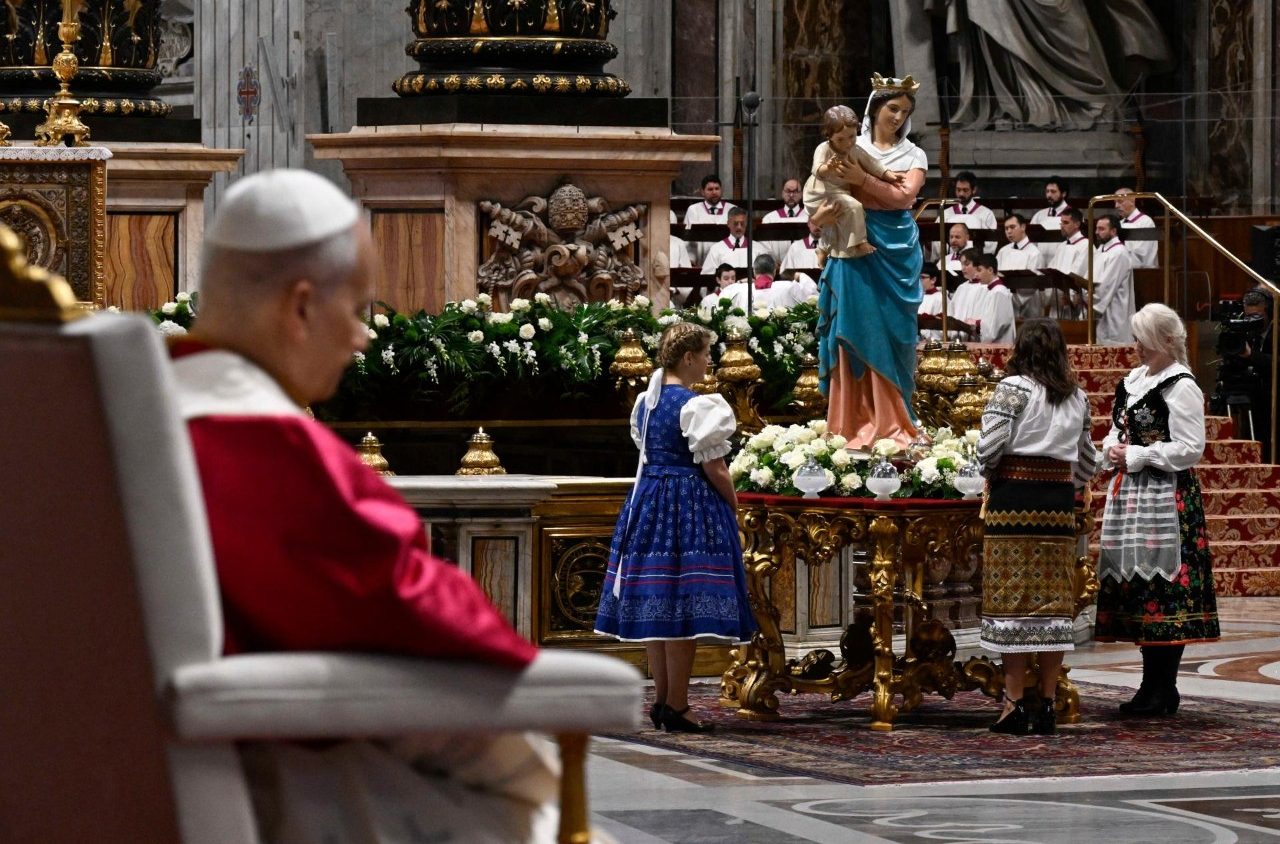
Faced with massacres and wars caused by the idolatry of power—by those who even presume to ‘enlist’ God on their side, offering religious justification for the killing of innocents—Pope Leo XIV has appealed to the overwhelming majority of people throughout the world who want peace, believe in peace, pray for peace, and build it day by day. He did so on the evening of Saturday, April 11, 2026, during the Prayer Vigil he convoked to implore an end to the wars currently underway.
Already on Tuesday, April 7, something similar had taken place at Castel Gandolfo: in the face of the threat to annihilate Iranian civilization, announced on social media by the President of the United States, the Successor of Peter had invited citizens of that country to contact members of Congress to ask for peace and to halt the massive attack on Iran’s infrastructure. Now, on the very day marking the 63rd anniversary of the Encyclical Pacem in Terris by Pope St. John XXIII, that same call has become universal and is addressed to the “millions and billions of men and women, young and old, who today choose to believe in peace” and who are “caring for the wounds and repairing the damage left behind by the madness of war.” Pope Leo asks that particular attention be given to the voices of children who have seen their peers die under bombs in Gaza, in Iran, in Ukraine, and in many other parts of the world.
Less than a week before the celebration of Easter, and on the eve of Eastern Easter, the memorial of the Prince of Peace’s defenseless victory, the Bishop of Rome thus places his hope in the prayer of a silent majority, in order to face the dramatic hour of history that humanity is living through. He asks that the invocations of so many be united with the “infinite possibilities of God,” in an effort to break what he calls a “demonic cycle of evil.”
The words of the Pope, who has made peace the hallmark of his magisterium, are unequivocal both in identifying the ultimately diabolical root of war and in rejecting outright any revival of the claim that “God is with us.” No, God cannot be with those who massacre civilians. God is with those who suffer, with those who die beneath the rubble.
Some expressions used by Pope Leo XIV are striking: prayer is “bulwark against that delusion of omnipotence that surrounds us and is becoming increasingly unpredictable and aggressive,” because those who pray are aware of their own limits and neither kill nor threaten. The exact opposite is true of those who make “themselves and their own power into a mute, blind and deaf idol, to which they sacrifice every value, demanding that the whole world bend its knee.”
It would be mistaken to consider this pressing invitation to prayer as an escape into spiritualism. This is demonstrated by another passage in the reflection of the Successor of Peter. After recalling the responsibility of each person to build peace, encounter, and friendship everywhere, Pope Leo XIV invites us to believe “in love, moderation and good politics.” A politics that does not consider words like dialogue and negotiations inappropriate, but instead finally seeks a ceasefire and then, lasting peace agreements.
