
Divinity and Personhood of God
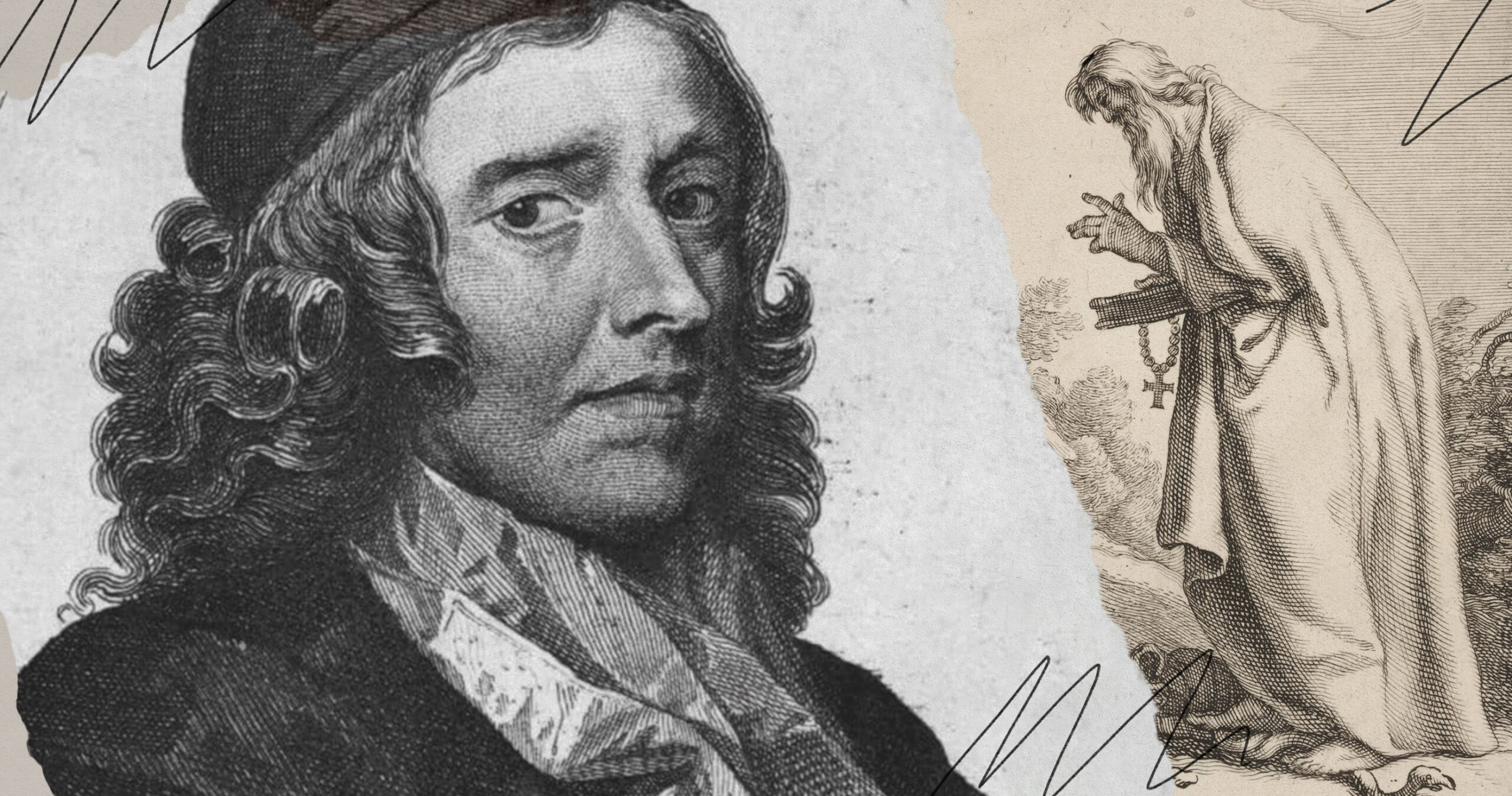
Blinded by disease at age four, Didymus (ca. 313–ca. 398) lost his sight before he could even learn to read. Centuries later, however, he is still called the “seer” (cf. 1 Sam. 9:9) for his spiritual vision of the grandeur of God, especially his work on the Holy Spirit. Didymus, like Owen over 1,000 years later, encountered opposition to a biblical and orthodox view of the Holy Spirit. Didymus argued against those who denied the divinity of the Spirit (i.e., the Spirit is a divine person), and Owen argued against those who denied the personhood of the Holy Spirit (i.e., the Spirit is a divine person), yet they both used the same arguments to defend these distinct claims.
Argument 1: The Holy Spirit Acts in Every Act of God
Didymus’s Focus on the Divinity of the Holy Spirit
Didymus’s interlocutors claimed that the powers and capacities of a person reveal their nature, just as the ability to breathe underwater reveals a fish’s nature. So if the Spirit had inferior powers and capacities, then the Spirit would have an inferior nature and not be God. But Didymus claimed that the Holy Spirit works inseparably with the Father and the Son, since “those who have a single activity also have a single substance.” And the Spirit does what the Father and Son do, so he has the same nature as the Father and Son.
For example, the Father sanctifies (John 17:17; 1 Thess. 5:23), the Son sanctifies (1 Cor. 1:30; Heb. 2:11), and the Spirit sanctifies (Rom. 1:4).1 The Father (John 14:23; 2 Cor. 6:16), Son (John 14:23; Gal. 2:20; Eph. 3:16–17), and Holy Spirit (1 Cor. 3:16) all dwell in believers. Didymus concluded, “Now if the Holy Spirit is also found in the very house and temple where the Savior and Father dwells, this demonstrates that the substance of the Trinity is indivisible.”2

In Owen Among the Theologians, authors Kelly M. Kapic and Ty Kieser invite readers to explore the theology of John Owen alongside the voices of other influential figures throughout church history.
Finally, regarding the question of which divine person established the church, Didymus said that one might answer that it was the Father (1 Cor. 12:28) or the Son (Matt. 28:19), but we must recognize that it was also the Spirit who “has made you overseers, to care for the church of God” (Acts 20:28). And Didymus added,
If those whom Christ sent to evangelize and baptize . . . are those whom the Holy Spirit placed in charge of the church and the Father appointed by his decree, there can be no doubt that the Father, Son, and Holy Spirit have a single activity and approval. It follows from this that the Trinity has the same substance.3
Owen’s Focus on the Personhood of the Holy Spirit
Owen, like Didymus, affirms that “The several persons are undivided in their operations, acting all by the same will, the same wisdom, the same power. Every person, therefore, is the author of every work of God, because each person is God.”4 Yet, it is not as though “one person succeeded unto another in their operation, or as though where one ceased and gave over a work, the other took it up and carried it on.” So we must not conceive of God’s operations in creation as being like a divine relay race in which the Son’s actions cease as he hands off the baton to the Spirit. Instead, “Every divine work, and every part of every divine work, is the work of God, that is, of the whole Trinity, inseparably and undividedly.”5
Yet Owen was aware that Scripture speaks of “works [that] are ascribed peculiarly to the Father, . . . to the Son, and . . . to the Holy Ghost,” and he used these “peculiar” (i.e., distinct) works to defend the distinct personhood of the Father, Son, and Holy Spirit.6 In books 1, 2, and 3 of Pneumatologia, he discussed the “peculiar works” of the Holy Spirit in creation, Israel, Christ, the church, regeneration, and sanctification, noting that the Spirit’s acts of “willing” with “understanding and choice” (e.g., John 3:8; 1 Cor. 12:11) demonstrate that the Holy Spirit is a person.7 Similarly, he noted that, after examining the Spirit’s acts of teaching, witnessing, comforting, and certain other actions (e.g., speaking, guiding, hearing, searching), “acknowledge him to be a divine person. . . . [A]s it proves him to be an understanding agent, so it undeniably denotes a personal action.”8 He thinks this is so clear in Scripture that he concludes, “If the Spirit isn’t an agent, and therefore person, then the Scriptures were meant to deceive us.”9
Argument 2: The Holy Spirit as the Gift of God Himself
Didymus’s Focus on the Divinity of the Holy Spirit
Didymus defended the Spirit’s deity as the essence of God by arguing that the gift of the Spirit is the gift of God himself. Didymus said, “The Holy Spirit is the fullness of the gifts of God,” and “the goods bestowed by God are nothing other than the subsistent Holy Spirit.”10 Didymus commented on Romans 14:17 that since “the entirety of virtue . . . is united to the joy of God” in the Holy Spirit, Paul “most clearly demonstrates that these goods are nothing other than the substance of the Holy Spirit.”11 Didymus drew from Isaiah 44:3—“I will pour my Spirit upon your offspring, and my blessing on your descendants”—saying that “no one ever receives the spiritual blessings of God unless the Holy Spirit precedes. For he who receives the Spirit will consequently have blessings, that is, wisdom, understanding, and so forth.”12 Isaiah identifies the Spirit as the gift of God, and this affirmation is fundamental for Didymus’s defense of the doctrine of the Spirit’s deity.
The Holy Spirit is either the infinite Creator who is the source of all good things, or he is a creature and depends upon God to be good and holy. Didymus drew his readers’ attention to Ephesians 1:13–14 and Ephesians 4:30, which both say that Christians are “sealed” with the Holy Spirit, and concluded that these texts meant that we “take on his form and likeness,” so that “the one who is made a sharer in the Holy Spirit becomes, through communion in him, simultaneously spiritual and holy.”13 The Spirit does not merely bestow on us some quality called “holiness,” but rather he bestows himself! Since the Holy Spirit is holiness in and of himself, and since we are made spiritual and holy by participating in him, then “it is clear that he is not created and not made”—meaning that he is the Creator, not a creature.14
The Spirit does not merely bestow on us some quality called “holiness,” but rather he bestows himself!
Owen’s Focus on the Personhood of the Holy Spirit
For Owen, the “two great means” of accomplishing salvation and the “two general heads of the promise of God” are the giving of the Son and the giving of the Spirit to God’s people.15 He said that “all the promises of God [can] be reduced” to these two gifts.16
Using the biblical language of “gift,” Owen argued,
So far as I can observe, δωρεά[dōrea], “the gift,” with respect unto God, as denoting the thing given, is nowhere used but only to signify the Holy Ghost. And if it be so, . . . “the gift of the Holy Ghost” [means] not that which he [i.e., the Holy Spirit] gives, but that which he is. . . . The Holy Spirit is singularly “the gift of God” under the New Testament.17
Owen worked to make sure that his readers distinguished the gift itself (i.e., the Holy Spirit) from the effects of that gift. The Spirit is a person, and persons are either present or absent (there is no in-between). But even our way of speaking about people as “less present” in certain situations (if they are preoccupied or inattentive) is useful here. We do not mean that they are more or less present in their being, but that their effects on a situation are less present than at other times. Likewise, when we speak of gifts and graces as more or less numerous at different times and to different people, we are referring to the effects of the Spirit and not to the Spirit himself—he is not parceled out in pieces.18 Thus, the word “gift” can refer at one time to the thing given and at another to the effect of that gift.19 Owen treated the “gifts” of grace, peace, sanctification, patience, and so on in this way—as effects of the gift itself, the Holy Spirit.20
Their Arguments Today
These arguments help both Didymus and Owen in their own days, and they can help us in our day as well. These two theological topics may not be frequently discussed in churches, but their neglect can contribute to pastoral problems. Neglecting the inseparability of God’s operations can lead to a divided view of God: for example, some people come to believe that the Son loves us but that the Father (at best) tolerates our presence, like the austere father of a birthday boy who lets us in the door only because his son invited us. Similarly, we are tempted to view salvation in distant and economic terms in which God treats us merely as numbers in an accounting problem, and his gifts are the transfer of possessions. We worry about our state of forgiveness, we obsess about our moral improvement, we assess which spiritual gifts we have and how to use them, we talk about “grace” as if it’s a substance or merely an action—all the while forgetting that God’s chief gift to us is himself, that everything else in life rests on knowing him as our Father through the Son by the Holy Spirit. The gospel is not most fundamentally that God gives us grace or forgiveness but that God gives us himself as Father in the gift of his Son and Spirit. That is, the triune God acts inseparably for us in giving us himself (see Matt. 7:11; Luke 11:13; Rom. 5:8; 1 Pet. 3:18). We therefore affirm the Spirit as both truly God and truly a distinctive divine person.
Notes:
- Didymus, Holy Spirit, §§231–34.
- Didymus, Holy Spirit, §108.
- Didymus, Holy Spirit, §105.
- WJO 3:93.
- WJO 3:94–95.
- WJO 3:67.
- WJO 3:81.
- WJO 3:85.
- WJO 2:401, 400.
- Didymus, Holy Spirit, §12.
- Didymus, Holy Spirit, §45.
- Didymus, Holy Spirit §42.
- Didymus, Holy Spirit, §20.
- Didymus, Holy Spirit, §29.
- WJO3:23.
- WJO 3:23.
- John Owen, Exposition of Hebrews, 5:77 (emphasis added).
- WJO 3:115.
- See in Owen, Exposition of Hebrews, 5:77.
- Owen, Exposition of Hebrews, 5:80.
Kelly M. Kapic and Ty Kieser are coauthors of Owen Among the Theologians: Conversations Across the Christian Tradition.


