This is the story of a group of around thirty people who undertook a journey through the Middle Eastern country, exploring biblical, archaeological and catechetical
themes. Leading them was Father Francesco Giosuè Voltaggio, professor of Sacred Scripture, who also contributed to the production of the project’s nine episodes.
Vatican News
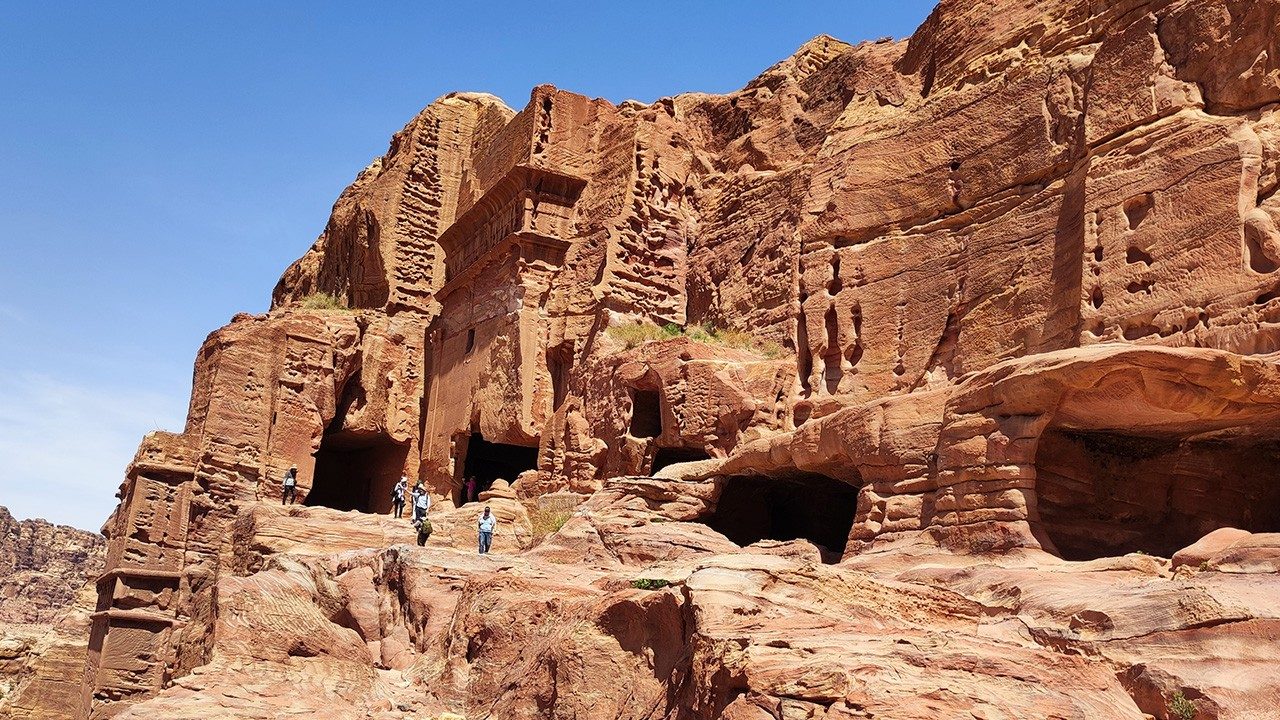
The Wadi Rum desert is the starting point: with its expanses of sand interspersed with rock formations that take on marvellous shades of red at sunset, it evokes an indescribable sense of wonder. It is not only the natural spectacle that fills the heart, but above all the fact of visiting these places in an area that the people of Israel crossed before reaching Mount Nebo and crossing the Jordan. And even more so, reading the Word of God linked to these territories, meditating on it in relation to one’s own life.
The idea stems from the pilgrims’ own profound experience, for the journey – like the podcast itself – was punctuated by biblical, archaeological, historical and catechetical insights provided by a special guide: Father Francesco Giosuè Voltaggio, professor of Sacred Scripture at the Studium Biblicum Franciscanum and the Studium Theologicum Galilaeae, and director in Jerusalem of the Domus Bethaniae, a study centre for the diploma in Christian Origins. The podcast also features testimonies from those living in Jordan, such as the Apostolic Nuncio to Jordan and Cyprus, Archbishop Giovanni Pietro dal Toso. In each episode, moreover, to bring the experience into life, there are voices from the participants on the journey, who testify how important it was for them to immerse themselves in the living reality of the Scriptures.
“The common thread” of the pilgrimage, explains Father Voltaggio in the podcast, is “Christian initiation”: “the Church Fathers, especially in the 4th and 5th centuries— the golden age of the Catechumenate— shaped it on the stages of the people of Israel in the desert. The whole of Christian life is a paschal itinerary.”

Wadi Rum desert
The desert and the heart
We begin, therefore, with the experience of the desert, a place of such aridity so often experienced in one’s own life, but also a place of silence, where God speaks to the heart. The Wadi Rum area and the region where Petra is located form part of the territory of Edom, whose progenitor was Esau, Jacob’s brother. Their history offers an opportunity, during the pilgrimage, to receive a word regarding our relationship with our brothers and sisters, and thus with others.
Idolatry and the covenant
The journey then continues further north, into the region of Moab. On Mount Nebo, Moses saw the Promised Land but was unable to enter it, and it was here that he died. Another marvellous place, Nebo, with its breathtaking views, provides an opportunity in the podcast to recall the story of Moses and the people of Israel who camped in the steppes of Moab. It is Brother Bernard Thilagarajah, a Franciscan friar, former guardian of the monastery on Mount Nebo and now parish priest in Limassol, Cyprus, who recounts in this episode how the excavations in the area began.
The struggle and the blessing
The journey then heads further north, towards the Jabbok stream, the site of Jacob’s struggle with God and his subsequent reconciliation with his brother Esau. The pilgrims then head towards the capital, Amman, where they meet Monsignor Giovanni Pietro Dal Toso. “I truly believe,” the archbishop emphasises, “that the experience of Jordan as a Holy Land can help all these pilgrims who come to renew their faith. Visiting biblical sites – and we have many in Jordan, especially those linked to the Old Testament but also to the New Testament – this can help in renewing one’s faith.” The Apostolic Nuncio also offers an insight into the history of this Middle Eastern country and the significant presence of Christians there. “For our Christians in Jordan, seeing Christians from the West come here, on pilgrimage, means feeling connected to the universal Church, feeling that they are not alone.” In Amman, there is also a meeting with Father Mario Cornioli, a fidei donum priest, who has undertaken projects to help Iraqi refugees— who fled the Nineveh Plains during the time of ISIS — enter the world of work, and whose testimony is featured in the podcast.

The Jabbok River
The Baptism
In the sixth and seventh episodes, the pilgrimage’s stage at the Jordan River is recounted, at the site of Jesus’ Baptism, which, as Father Voltaggio recalls, “is one of the greatest archaeological discoveries of recent times: ancient Byzantine churches have been found and sites described by the earliest pilgrims have been brought to light.” “The Gospel already mentions Bethany beyond the Jordan, later called Bethabara,” recalls Father Voltaggio, who then explains the historical and archaeological reasons for this location, also emphasising that this is the area where Joshua and the people crossed the Jordan and where the prophet Elijah was taken up into Heaven.
The pilgrims then visit the nearby Church of the Baptism of Jesus, consecrated in 2025, where they meet Father Sergio Perez, responsible for the community of the Institute of the Incarnate Word to which this site is entrusted. Father Perez recounts, also in the podcast, the story of the founding of this church. Finally, the tour stops at Madaba, the city of mosaics, and at Machaerus, the fortress where Saint John the Baptist was beheaded.

Machaerus
Evangelisation
The pilgrims then head to Gadara and Gerasa, Roman cities of Hellenistic culture forming part of the Decapolis, among the first centres where the Gospel was proclaimed. “These very roads that we can still see today, major routes of passage that extended all the way to Rome,” explains Father Voltaggio, “were travelled by the Apostles themselves. Just think of Saint Paul. We need only recall that Paul alone covered more than 15,000 kilometres along the roads of the Empire. And so, gradually, Christianity entered the Empire itself and conquered it from within: a peaceful conquest thanks to the proclamation, the preaching and the conversion of the first believers who embraced Christ, the kerygma, His Word.”
