
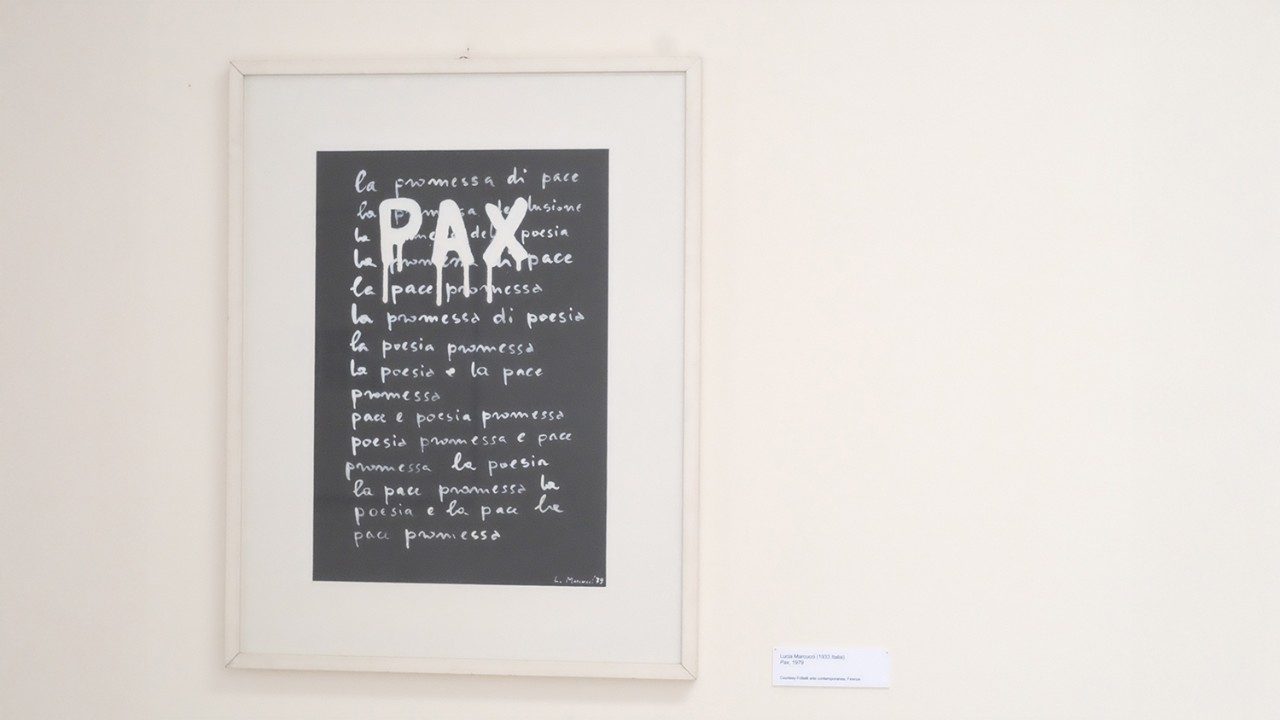
Cardinal José Tolentino de Mendonça—a poet and Prefect of the Dicastery for Culture and Education—reflects on the connection between poetic art and peace in an interview with Vatican News.
By Eugenio Murrali
Poetry is one of the deepest forms of listening. It originates from silence and perhaps requires poets to become, more than authors, interpreters capable of attuning themselves to the visible and invisible realms of the universe.
From this mysterious dialogue with creation, the word takes shape through the voices of poets. Moreover the ability to make space within oneself turns poetry into education for peace.
“The beating of a butterfly’s wings,” observes Cardinal José Tolentino de Mendonça, “or the beating of syllables in a word, ignite dynamics of meaning, light, or darkness in the human heart. Poetry offers us unarmed and even disarming words because it works with surprise. Poetry is a precursor to the art of peace.”

Cardinal José Tolentino de Mendonça reflects on the connection between poetic art and peace.
These are the thoughts of the Prefect of the Dicastery for Culture and Education, who, on World Poetry Day—established by UNESCO in 1999—answers questions about the importance of this art for a world increasingly threatened by war. Speaking as a cardinal and poet, he argued: “Poetry is on the side of peace.”
A pact with the future
An ancient connection links poetic art to truth. Turning to the 19th-century French poet Charles Baudelaire, Cardinal de Mendonça explains that “poetry lays the heart bare, and that nakedness of the heart, close to the great human questions, builds approaches to truth. The great poet Paul Celan said: ‘Only true hands write true poems.'”
Amid the whirlwind of modernization, lyrical words mark the persistence of the human spirit. In the apostolic letter “Drawing New Maps of Hope”, Pope Leo XIV recalls the importance of poetry: “No algorithm will replace what makes education human: poetry, irony, love, art, imagination, the joy of discovery, and even the education of error as an opportunity for growth.”
In this regard, the Prefect of the Dicastery for Culture and Education observes: “The algorithm thrives on repetition. It’s a mechanical, mindless mechanism of re-enacting past steps, while poetry opens us to the path not yet taken, to the undiscovered.” This search for the “unsaid word,” the unheard that inhabits the world, is a treasure.
“When one begins a poem, one doesn’t know what will come of it, and that not-knowing is a human capital in the construction of ourselves. Because what is the great danger of the algorithm? It strips from humanity the ability to envision the possible—the possibility of what we have not yet been but can become through encounter, relationship, gift, and the mysterious approach to a threshold. The algorithm always speaks of yesterday; poetry has a pact with the future.”
The fiery solitude of poets
“Long live poetry!” wrote Pope Francis in his book of the same name, reminding us of the importance of this art in “being human” and also the role it plays in the formation of priests.
From this point, the cardinal affirms that “in the fiery solitude of some poetic biographies, there is a great lesson.” He refers to the Portuguese poet Fernando Pessoa, who struggled to stay true to himself and lived every day “in a permanent tension, trying to bring all the great life experiences into a poetic dimension, that is, into a dimension of consciousness, of awareness.”
UNESCO first adopted 21 March as World Poetry Day during its 30th General Conference in Paris in 1999 (Charnsitr)
The Prefect also recalls when Pope Francis, on the return flight from his trip to Thailand and Japan, observed how the Western world can learn from the East “to look at things poetically.” The cardinal explains: “Poetry is also slowness. It is also the ritual before life. It is veneration. It is the awareness that we are close to the sacred in the everyday. It is valuing contemplation and silence. In this sense, poetry can constitute a spiritual education.”
An educational tool
At the conclusion of the spiritual exercises on February 27, Pope Leo XIV referenced the Doctor of the Church, Saint John Henry Newman, and his poem The Dream of Gerontius, where Newman—according to the Pope—uses death and Gerontius’ judgment as a prism through which the reader is led to contemplate their own fear of death and sense of unworthiness before God.
This saint, theologian, and lover of poetry has much to teach. “Saint John Henry Newman plays a crucial role in the foundation of modernity and is deeply committed to education for peace, saying that each generation needs to receive from the previous one confirmation, knowledge, and must manage, internalize that legacy, transforming it into an energy of vision, purpose, and the ability to responsibly inhabit the world,” the cardinal continued.
In this sense, literature and poetry are also essential educational resources.
A school of the universal
In a speech addressed to young people in 1991, Italian poet David Maria Turoldo stated that perhaps the theme of peace is not only the most revolutionary one, but also the most difficult.
According to Cardinal de Mendonça, “peace teaches us the ‘we.’ It speaks of humanity as a common heritage.” This is where its complexity lies because we are often tempted to divide, to set one language against another. Poetry, in this sense, teaches us that we are all brothers, because it transcends the borders of nations and “exists as a great repository of humanity.”
The cardinal adds: “Literature is a school of the universal because it values the universal and understands that the great ideas, the most beautiful images, truly have no author. Many poets believe that poetry preexists all those forms, and that we can tune in and listen to it. This speaks to us of peace, because it is not the opposed vision or the claim of what belongs to me, but the contemplation, the wonder, the affirmation of what belongs to all, because it is a good for all.”
Without silence, there is no poetry
Poetry cannot exist without silence, which often tempts poets. “It is a word,” concludes Cardinal de Mendonça, “that was first founded in silence and can only then grow. In poetry, there is still the resonance of silence, because silence means listening; it means hospitality. Therefore, poetry is one that retains the thirst and unease of the search, inhabits the truth with humility, but does not proclaim it and does not impose it. It allows itself to be inhabited by truth and remains silent. Poetry is the word that waits, that knows how to wait for everyone.”
