
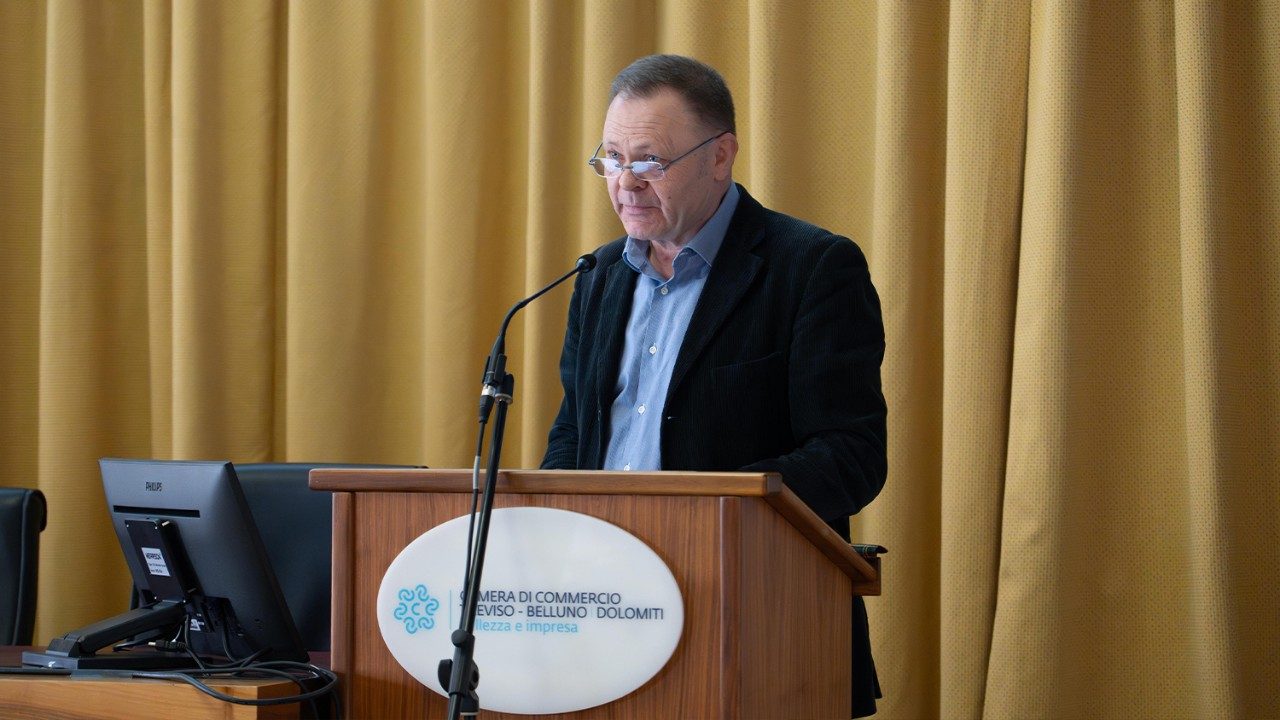
At the GreenAccord Forum, researcher Krzysztof Szadejko highlights how climate awareness among young people is increasingly linked to uncertainty, fear, and a lack of long-term planning.
By Francesca Merlo – Treviso, Italy
During the third day of the 17th GreenAccord International Forum taking place in Treviso, Northern Italy, discussions on the climate crisis extended beyond policy and technology to focus on its psychological impact, particularly on younger generations.
Krzysztof Szadejko teaches methodology and statistics in Modena, Northern Italy, and works in psycho-traumatology and stress management in Milan. He addressed those attending the Forum and presented research examining how young people are responding to climate change.
His findings suggest a clear pattern: awareness is high, but it is not translating into confidence about the future.
Awareness of young people
Speaking to Vatican News on the sidelines of the event, Szadejko notes “young people are very sensitive. They are aware of what is happening”. However, that awareness is bringing about more fear than it is action. In his research, more than 40 percent of participants reported that they do not see their future in concrete terms, meaning they are not making long-term plans.
Some responses go further. When asked about the impact of climate change on their lives, participants spoke about decisions not to have children or build families due to uncertainty about what the future might look like. Szadejko described these responses as “very sad”, noting the weight of this perception among young people.
He also stressed that climate change is not experienced in isolation. Other factors – such as war and recent global health crises – contribute to a broader sense of instability. “It is a big mixture,” he explained, suggesting that these overlapping concerns intensify uncertainty rather than allow for clear responses.
In this context, current education systems appear insufficient. While some initiatives exist, often led by individual teachers or organisations such as Greenpeace, Szadejko sees these as limited in scale. “There are too few programmes and too little attention,” he said, noting that climate education is still not consistently integrated.
Information that must be heard
At the same time, the issue is not limited to younger generations. Szadejko pointed to a gap between age groups, arguing that older generations are less likely to recognise the impact of their lifestyle on the environment. “Young people are aware of the situation,” he said.
“But our generation is used to a certain style of life.” For him, research plays a key role, but only as a starting point. Data can help explain what is happening and support accountability, but it must lead to action. This includes both wider public awareness – particularly among older populations – and political engagement.
“All this information should be heard by governments,” he said, emphasising that findings should not remain confined to academic contexts. “Plural: governments”, he emphasised. While his study is based in Italy, he argued that the implications are broader and require international attention. He also stressed the need for coordinated action. “We can pull the cart from many sides, but we have to pull it in the same direction,” he said, calling for greater collaboration between governments.

A programme of the event
Need for support
A lack of action, he warned, risks reinforcing a sense of isolation among young people. One of the key findings of his research is that many feel unsupported. “Young people feel alone, not helped,” he said, adding that institutions have a responsibility to address this.
Looking ahead, Szadejko argued that more research is needed, particularly across different countries and cultural contexts. Climate change, he suggested, should be studied not only as an environmental issue, but also in terms of its impact on people’s psychological and social well-being. Current findings, he concluded, are only partial. A more comprehensive understanding will depend on sustained, collaborative research at an international level.
