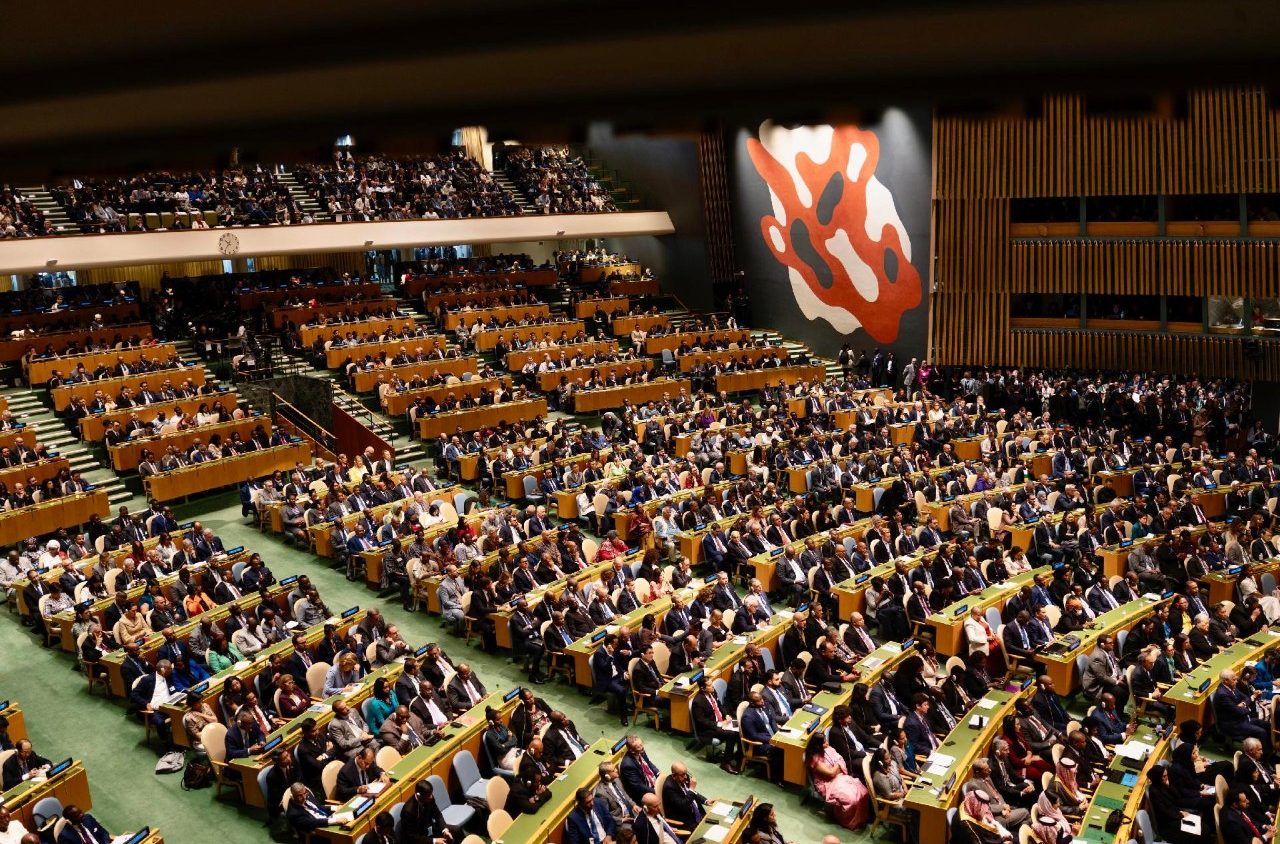

A note from the Permanent Mission highlights the risks of exploitation in surrogacy, describing it as a field where “the technology and practice have run laps around the law and ethics”: a life can never become a “product,” and respect for dignity and rights must always come first.
By Vatican News
Combating violence and exploitation linked to surrogacy and strengthening the protection of the dignity of women and children. This is the message at the centre of a statement issued by the Permanent Mission of the Holy See to the United Nations on the occasion of a side event of the 70th Commission on the Status of Women, dedicated to the theme “Protecting Women and Children: Combating Violence and Exploitation in Surrogacy.”
A debate at the Commission on the Status of Women
The statement first expresses appreciation for the partners of the initiative — the Government of Italy, Türkiye and Paraguay — and draws attention to an issue described as “urgent,” in which “the technology and practice have run laps around the law and ethics.”
While acknowledging that many view surrogacy as “a compassionate solution for those wishing to be parents,” the note emphasises that “the whole context must be taken into account” in determining whether the practice is compatible with “respect for the dignity and rights of women and children.”
Economic pressures and risk of exploitation
Among the concerns raised is the economic dimension of the phenomenon. Many women who agree to become surrogates cite “economic need as their primary reason” for doing so. It is therefore not surprising, the statement notes, that “stories of the rich and famous commissioning surrogates are common, whereas stories of wealthy women serving as surrogates are rare.”
The demand for children born through this practice, the document continues, “already exceeds the supply,” while measures such as “social protection, education, and economic opportunity” — which could reduce the risk of exploitation — would likely lead many women “to refuse to enter such arrangements.”
For this reason, the statement asks whether “the surrogacy industry could survive if poverty were eradicated.”
The note also highlights that where commercial arrangements are permitted, potential surrogates may find themselves in “a perverse competition for commissioning parents.” Even in countries where commercial surrogacy is prohibited, compensation for costs or supposed “gifts” may sometimes “disguise payments.”
In some cases, the text adds, women who would not otherwise enter such agreements may be “pressured or even forced into them by family members,” while those living in poverty are unlikely to be able to afford “independent legal or medical advice.”
The rights of children
The statement also refers to concrete cases in which “over a dozen babies” were found being cared for by nannies in rented homes, while commissioning parents continued to employ additional surrogates.
The commodification of children, it adds, can also intersect with prejudice, for example, in cases of prenatal diagnoses of disability. In such situations, the child risks being treated as “a flawed ‘product’ or a problem to be solved” rather than welcomed as a gift.
This attitude, the note states, runs contrary to a just society in which children can grow and flourish. Children, in fact, possess rights and interests that must be respected, beginning with “a moral right to be created in an act of love.”
Under the Convention on the Rights of the Child — described as “the most widely ratified human rights instrument” — children also have “a right to know and be cared for by their parents.”
That this right cannot always be fulfilled, the document observes, “should not be used to excuse a practice which deliberately violates them.”
The position of the Holy See
While recognising “the very real and understandable desire to have children,” the statement maintains that these concerns cannot be resolved simply through regulation.
In this context, it welcomes the decision of the Hague Conference on Private International Law not to pursue, at least for the time being, further work on a convention concerning legal parentage in cases of surrogacy.
The document concludes by recalling a recent statement by Pope Leo XIV, who said that “by transforming gestation into a negotiable service, [surrogacy] violates the dignity both of the child, who is reduced to a ‘product,’ and of the mother, exploiting her body and the generative process, and distorting the original relational calling of the family.”
The text also cites Pope Francis, who said that “a child is always a gift and never the basis of a commercial contract.”
In light of these considerations, the Permanent Mission of the Holy See expresses the hope that the discussion initiated within the Commission will encourage further steps “toward ending this practice in all its forms and at all levels,” with the aim of protecting women and children “from exploitation and violence.”
About the Author