
Though perpetrators try to keep it hidden, human trafficking violates human dignity and cuts across borders, cultures, the vulnerable, poverty-stricken communities, and the desperate. Yet, it is much closer than we think, inhabiting our phones and social media as a promise of opportunity popping on screen. Religious sisters with Talitha Kum Kenya are tenaciously building a network with both local presence and global impact.
By Sr. Christine Masivo, CPS
Traffickers have embraced the digital age globally. Religious sisters are at the forefront of the fight against human trafficking, a profitable and technologically sophisticated trade, through Talitha Kum Kenya, an international network under the International Union of Superiors General (UISG), headquartered in Rome.
Sr. Mercy Mwai (FSJ), a Franciscan sister of St. Joseph and director of Talitha Kum Kenya, recounts how faith, collaboration, and local actions are transforming the fight against human trafficking.
The battle
In response to Pope Francis’ call during the Jubilee Year of Mercy, Talitha Kum Kenya was established in February 2016 to reach out to those living in and affected by human trafficking. The initiative took shape in 2022, funded by the Conrad Hilton Foundation.
It operates as a charitable organization connected to the global Talitha Kum Network, coordinating a wider membership including religious men and women, young people, and lay associates across Kenya, helping to respond to trafficking in villages, border regions, urban settlements, and online presences.
Prevention at grassroots and online
“Human trafficking is not just an African problem,” Sr. Mercy explains, stressing that it is a global problem crisis affecting people of all ages seeking better opportunities. As trafficking overlaps with cybercrime, criminals exploit digital spaces to trap victims.
Talitha Kum responds to this need through prevention, protection, and partnership, recognizing that the process must be as interconnected as the crime itself.
“Many victims realize that they are being trafficked when it’s too late,” Sr. Mercy echoes. Pointing to fake job ads, false Visa promises, and a secret online interview as common traps. To prevent this, sisters and their partners conduct workshops, community forums and parish outreach to educate communities about trafficking, how it works, and its warning signs.
Partnership
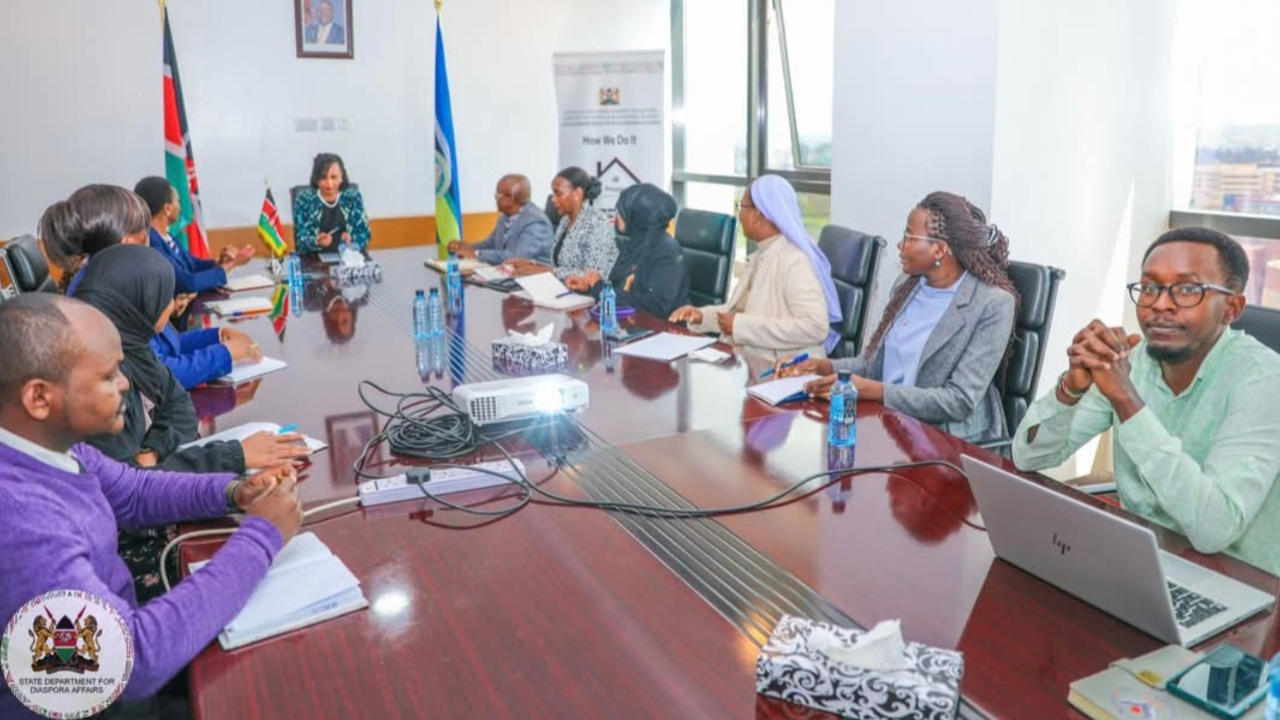
Police officers and border security personnel are trained to identify trafficking indicators and respond appropriately, in conjunction with the Director of Criminal Investigations (DCI), the Ministry of Gender’s Counter-Trafficking Secretariat, and the State Department for Diaspora and Foreign Affairs.
Special attention is given to Kenyan border regions with Somalia, Ethiopia, South Sudan, Uganda, and Tanzania.

Traffic police attend a session on human trafficking
Rescue to integration
Victims are identified through government referrals, partner organizations, member congregations, and a toll-free hotline. International rescues are carried out by law enforcement agencies, and when they get back home, they are received by the sisters and accompanied to safe shelters.
Survivors undergo screening to assess their experiences and needs, most requiring psychological support to address trauma. They receive medical care, economic empowerment through small businesses, and vocational training to support their recovery.
“The goal is holistic reintegration,” Sr. Mercy emphasizes, explaining that freedom is not just about being rescued, but about rebuilding life with integrity.
Nuns on the frontline
Religious sisters are a backbone to this mission, organizing community trainings, identify cases accompanying survivors, provide counseling, and opening their institutions for skills training. In coastal regions like Malindi and Mombasa, they are directly involved in rescuing victims of trafficking and gender-based violence.
Sr. Mercy shares the moving case of a Burundian woman trafficked into Kenya and later confined with her children, until a coordinated effort with Talitha Kum, the DCI, lawyers, the embassy, and the Missionary Sisters of Our Lady of Africa, secured their freedom and safe return home.
Their success affirms that solidarity with survivors extends beyond national borders.

Talitha Kum Kenya member congregations pose for a photo during their AGM
Digitalized challenges
Traffickers are constantly evolving. recruitment, cyber fraud, and even exploiting highly educated youth, including IT professionals, for digital scams abroad.
Talitha Kum Kenya faces direct threats from trafficking networks and overwhelming needs among survivors, often beyond available resources. Limited funding, security risks, and the depth of trauma survivors carry always remain ongoing concerns.
Yet the sisters still persist.
Global responsibility
Human trafficking thrives in silence, fragmentation, and ignorance. Talitha Kum Kenya offers a different way of collaboration, awareness, faith, and courage. As Sr. Mercy concludes, no single organization can end trafficking alone.
“This is a global crime, and it requires global force,” she says. “Government, Churches, schools, NGOs, communities, everyone has a role. Together we can combat the perpetrators and restore freedom.”
The witness of the sisters in this mission shows to the world that the need for vigilance, compassion, and collective responsibility must move faster than exploitation that travels at the speed of a click.
