

The Vice President of the Federation of Asian Bishops’ Conferences reflects on the growing conflict in the Middle East, warning that digital warfare can make violence appear distant from the human suffering it causes.
By Fr. Mark Robin Destura, RCJ
Cardinal Pablo Virgilio David, Vice President of the Federation of Asian Bishops’ Conferences (FABC), has warned that modern warfare risks becoming dangerously detached from human reality, as missiles and drones continue to fly across the Middle East.
Following the news on the Middle East conflict, he looked at how the war is being done, when the United States and Israel launched at the beginning what they described as a preemptive strike against Iran. What was initially presented as a limited military action is quickly escalating into a widening regional conflict.
Iran retaliated with waves of missiles and drones, targeting not only Israel but also American bases scattered across the Gulf region. Air defenses intercepted missiles over Turkey, while a British base in Cyprus reportedly came under drone attack. Meanwhile, Israel carried its strikes northward against Hezbollah in southern Lebanon.
In less than a week, the conflict had already spilled across more than a dozen countries.
War through screens
What makes the situation particularly troubling, Cardinal David noted, is not only the scale of the conflict but also the way it is being fought.
Much of today’s warfare is conducted through digital command systems, drones, satellites, and artificial intelligence.
“From distant command centers, military operators stare at screens where maps, radar signals, and algorithm-generated targets move like icons in a computer game. A cursor moves. A coordinate is selected. A click is made. And a missile is launched,” he said.
Such technology can create the illusion that war is clean and controlled. Yet the screen does not show what happens when the missile reaches its target.
The human cost
On the ground are ordinary people, he said, “whose lives have nothing to do with the calculations of generals or the ambitions of politicians: children asleep in their beds, mothers preparing meals, elderly people who cannot run fast enough to reach a shelter.”
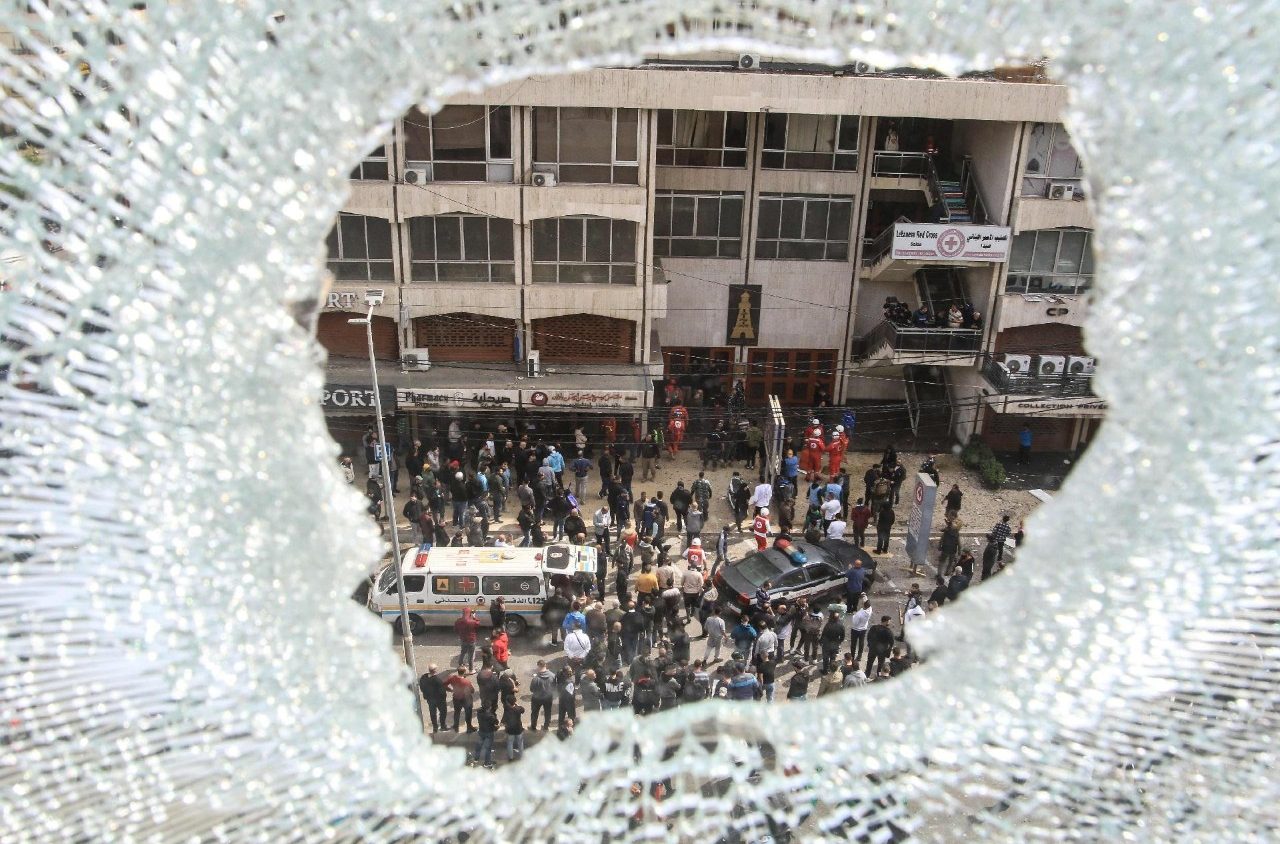
When missiles slip through air-defense systems, they do not disappear harmlessly in the sky. They explode “where people live—inside apartment blocks, hospitals, hotels, crowded streets.”
“And when the smoke clears, the casualties are not symbols on a screen. They are human beings,” said Cardinal David.
Workers caught in the conflict
Talking about Filipinos working overseas, he sees the consequences of the conflict extend far beyond the battlefield.
Across the Gulf region live millions of migrant workers who left their homelands to support their families. Among them are many Filipinos working in homes, hospitals, hotels, and construction sites.
At sea, thousands of seafarers—many of them also Filipinos—crew ships passing through the Strait of Hormuz, one of the world’s most important maritime corridors. Should the waters become a war zone, they would be among the first to face the danger.
A call to conscience
“The economic shock of the conflict will also reach far beyond the Middle East,” continued Cardinal David. “When oil routes are threatened and shipping disrupted, the burden is often carried by vulnerable nations that depend on imported energy and on the remittances of workers abroad.”
In conflicts like these, suffering is rarely limited to the battlefield.
For Cardinal David, this reality raises a troubling moral question: who truly benefits from war? He answered, “Certainly not the families who bury their dead. Certainly not the workers who suddenly find themselves trapped in a war zone far from home. Certainly not the poor nations that will absorb the economic shock.” The benefits go to the “industries that manufacture weapons.”
The tragedy of war, he reflected, is not only the destruction it brings, but also the frightening ease with which it can be started.
Certain questions must be asked, he said. Questions like “When will humanity wake up from the madness of war? Who will hold the architects of this war accountable? When powerful leaders launch wars in the name of ‘security’ or ‘preemption’… will the world simply watch in silence?”
In an age when decisions can be made with the press of a button, humanity must ask itself how these wars will continue to be launched so easily. He concluded: “Those who command the screens rarely see the bodies.”
