
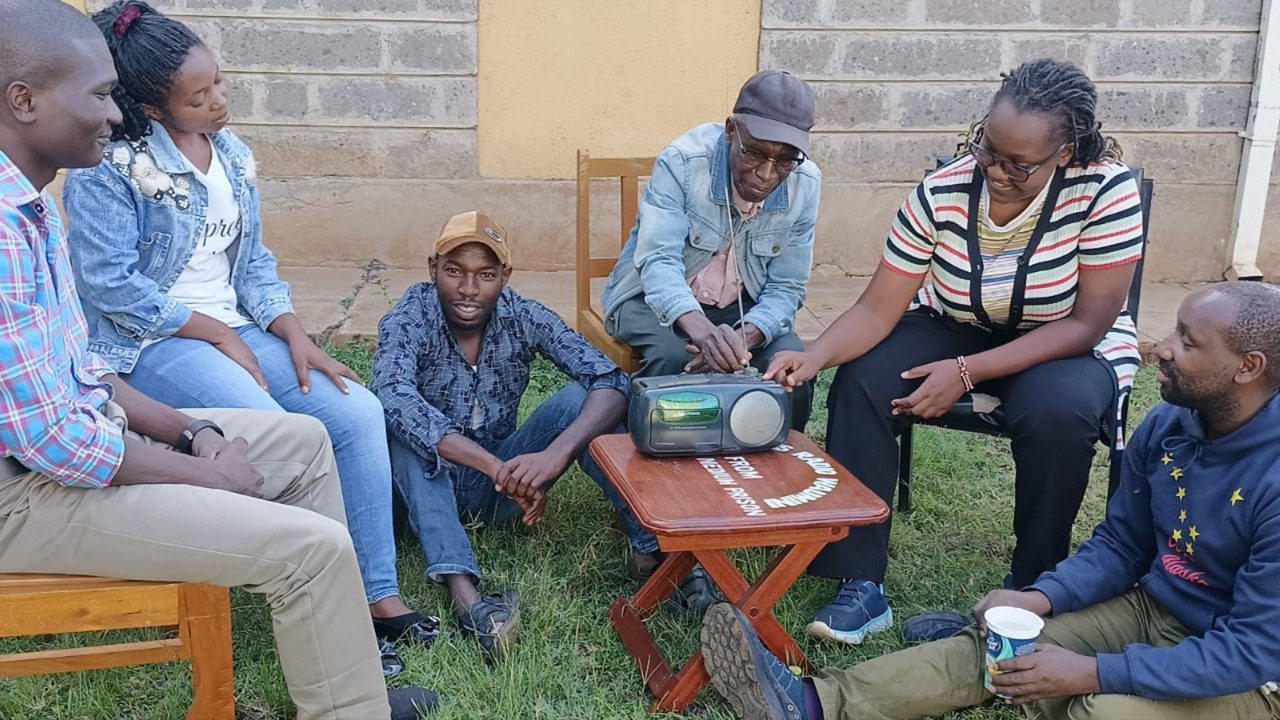
Founded in 1931 by Guglielmo Marconi at the request of Pope Pius XI and placed under the guidance of the Jesuits, Vatican Radio continues its global service. For its part, the English Africa Service has been broadcasting to the continent for 76 years.
Festus Tarawalie and Paul Samasumo– Vatican City
12 February 2026 marks the 95th anniversary of Vatican Radio, a pioneering voice in global broadcasting and one of the Church’s most historic media institutions.
Established on 12 February 1931 by Guglielmo Marconi, inventor of wireless telegraphy, at the request of Pope Pius XI, Vatican Radio began its mission with the first papal radio message. This event began a new era in the Church’s use of modern communication to proclaim the Gospel.
Support for evangelisation in Africa
Six years later, in 1937, the English Language Programme was launched, expanding the reach of the Pope’s voice to English-speaking audiences. English-language broadcasts to Africa began in 1950, marking an important step in reaching listeners across the continent.
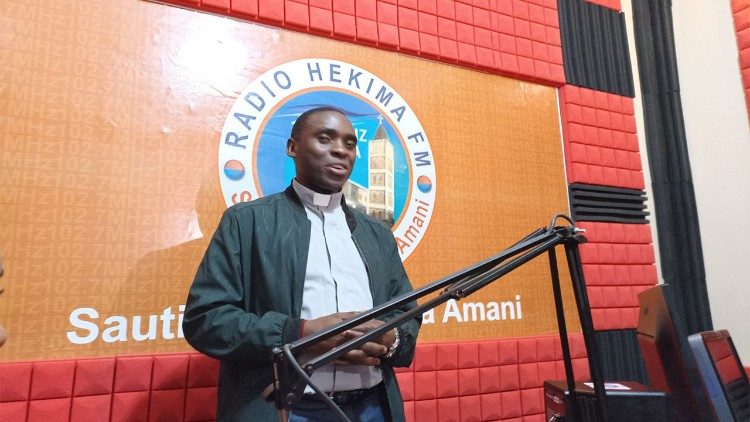
Catholic Radio Hekima in Tanzania
The timing of broadcasts to Africa was essential. The 1950s and early 1960s were a period of resurgence in Africa. This era was marked by the dismantling of colonial systems, the rise of new independent African nation-states, and a renewed appreciation of African cultural identity, including philosophies and aspirations such as Pan-Africanism.
The Catholic Church in Africa was equally experiencing significant growth and began to transition from a missionary-led Church to one driven by local, indigenous Bishops and communities.
Dedicated broadcasts to Africa
Nevertheless, it was not until 1979 that the English Africa Service, as it is known today, was formally established. It emerged from the broader English-language section in response to changing social, political, and ecclesial realities across Africa.
In 1993, the Service introduced daily broadcasts of the Gospel readings in Ki-Swahili — a widely spoken Bantu language and a lingua franca of East Africa. A year later, with approval from the Directors of Vatican Radio, Ki-Swahili also became an established language programme under the English Africa Service.
The Hausa Language broadcasts
Another significant milestone came in 2002 with the launch of daily broadcasts in Hausa, a Chadic language spoken by between 100 and 150 million people in West Africa. Although the initiative was short-lived, it reflected the radio’s commitment to reaching wider audiences on the continent.

World Radio Day – 13 February 2026
The current English-language half-hour daily broadcast format was adopted in 1995, one year after the First Special Assembly for Africa of the Synod of Bishops (First African Synod). Its structure reflects themes proposed in Pope Saint John Paul II’s 1995 post-synodal apostolic exhortation, Ecclesia in Africa — “The Church in Africa.”
Additional elements were later incorporated following the publication of Africae Munus — “The Commitment of Africa” — issued by Pope Benedict XVI in 2011, two years after the Second African Synod held in Rome in 2009.
At the heart of Africa’s pastoral priorities
Through these developments under the current Dicastery for Communication, the English Africa Service has continued to adapt, bringing the Pope’s voice to the 23 African countries where English is the official language.
For decades, Vatican Radio was broadcast on shortwave radio (SW) transmitters in Rome to reach the continent. Today, the primary delivery method is through cooperation with partner Catholic diocesan radio stations in Africa, as well as the Radio Maria Africa network.
All in all, the English Africa Service of Vatican Radio has remained attentive to the pastoral joys and challenges of the local Churches, as well as the evolving realities of the African continent.
In Africa, radio is a lifeline for communities
Radio stations in Africa are a lifeline for communities, especially rural communities. Despite the rapid technological advancements and the growth of mobile phones, the internet and social media, radio stations are found everywhere in Africa. The Catholic Church, in particular, has invested heavily in diocesan radio stations.
Radio remains a trusted and accessible source of information in rural Africa. Its continued importance stems from its ability to overcome challenges such as low literacy levels, limited access to electricity, and poor internet connectivity.
