
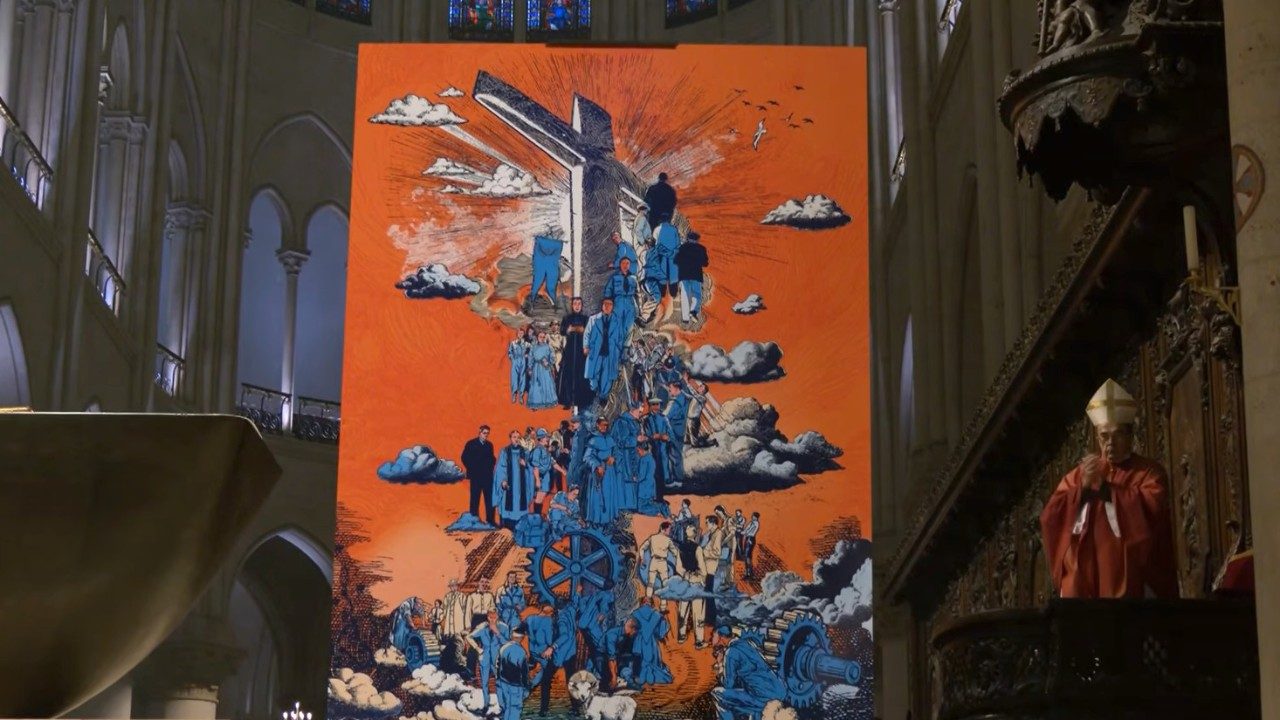
Three different groups of martyrs, nearly 200 in total, are beatified in celebrations in the Cathedrals of Jaen, Spain, and Notre Dame in Paris.
By Pierfrancesco Loreto
On Saturday, 13 December, two Masses were celebrated respectively in the Cathedral of Jaen in Spain and at Notre Dame Cathedral in Paris for the beatification of Venerable Servants of God, men and women who gave their lives to remain faithful to Christ in times of persecution.
In the first instance, 124 martyrs of the Spanish Civil War were beatified in a celebration presided over by Cardinal Marcello Semeraro, Prefect of the Dicastery for the Causes of Saints.
As the Jaen Diocese itself recalls, these people made the ultimate sacrifice “for the love of Christ”, and their example continues today to encourage the faith of the whole community.
Choosing the 124 martyrs has involved a research process that dates back to the 1990s and early 2000s. The object of the inquiries was to show that, in fact, they were killed solely on account of their faith, “and not for other motives,” the Delegate for the Cause of the Saints, Andres Najera, said.
“In a violent and aggressive world, with a lack of respect for ideologies and beliefs, the 124 [Servants of God] made a difference by affirming that violence is not the solution; the answer comes from forgiveness, and this is the lesson that the Gospel gives us. The world needs goodness”, he added.
The Venerable Servants of God of the diocese of Jaén were killed in various places and at different times during the Spanish Civil War, which featured elements of cruel anti-Catholic persecution.

Artwork depicting the martyrs of Jaen
Two different groups of Martyrs beatified in Jaen
The beatifications celebrated in Spain concerned the martyrdom of diocesan priest Manuel Izquierdo Izquierdo and 58 companions; and the martyrdom of his colleague Antonio Montañés Chiquero and 64 associates, all killed between 1936 and 1937. The two groups were the subject of separate “causes” for canonization.
Revolutionaries moved by anti-religious and anti-Christian sentiments massacred numerous priests, religious, and laypeople, and looted churches and places of worship. The guerrillas’ odium fidei, hatred of the faith, driven by atheistic propaganda, was amply demonstrated by the general violence against the Church, towards its ministers and many of its faithful.
The militia established a climate of persecution against all those who professed to be members of the Catholic Church, be they priests, consecrated persons, or lay people.
The leader of the martyrs of Jaén, Don Manuel Izquierdo Izquierdo, was particularly affected by the mistreatment and torture inflicted by the persecutors, and so was Don Manuel Valdivia Chica, whose hands were cut off before his death.
Despite the danger, the priests chose not to leave the parishes where they carried out their ministry to stay close to their congregation. Some of the priests, including Don Antonio Montañes Chiquero, asked to be killed last so that they could hear the confessions of the others and help them die a holy death.
The celebration in Paris for the French Blesseds
Later on Saturday, in the Cathedral of Notre-Dame in Paris, Cardinal Jean-Claude Hollerich, Archbishop of Luxembourg, presided at the Mass of beatification of Raymond Cayré, diocesan priest; Gérard-Martin Cendrier, religious of the Order of Friars Minor; Roger Vallée, seminarian; Jean Mestre, layman, and 46 of their companions.
This Mass of collective beatification was the most important of its kind held in France.
The majority of these Catholics came from the Young Christian Workers (JOC) and died primarily in concentration camps where they had been sent because of their apostolate, an activity prohibited by the Hitler regime.
They were part of the “Mission Saint Paul”, a form of clandestine chaplaincy set up by French bishops to provide spiritual assistance to young people requisitioned for the Compulsory Labor Service (STO), which involved between 600,000 and 650,000 workers.
That scheme was introduced on 16 February 1943 by the Vichy Regime to send a large number of French citizens to work in Germany and fill the places of Germans engaged at the front.
Many priests, religious and lay people belonging to Catholic associations covertly followed French workers sent to German territory to provide them with moral and spiritual support. As a result, they were arrested for subversive activity against the Third Reich, tortured and put to death mainly in the concentration camps of Buchenwald, Mauthausen, Dachau or Neuengamme.
Most died there, while others lost their lives due to the suffering they endured.
